
Discover Powerful Interesting Synonyms That Transform Your Writing 2026
Introduction
You know that feeling when you’re writing something important and the word “interesting” pops up for the third time in two paragraphs? It’s frustrating, right? You want to describe something captivating, but your brain keeps reaching for the same tired word. The truth is, relying on “interesting” makes your writing feel flat and repetitive. But here’s the good news: the English language offers dozens of vibrant alternatives that can transform your content from forgettable to memorable. In this article, we’ll explore powerful synonyms for “interesting” that will elevate your writing, whether you’re crafting an essay, blog post, email, or creative story. You’ll discover when to use each alternative, how to choose the right word for your context, and practical tips to make your vocabulary work harder for you. Let’s dive into the world of expressive language and find the perfect words to replace “interesting” once and for all.
Why “Interesting” Weakens Your Writing
The word “interesting” has become a crutch in modern communication. It’s vague, overused, and rarely tells your reader what you actually mean. When you call something interesting, you’re not painting a picture or creating an emotional response. You’re simply stating that something caught your attention without explaining why or how.
Think about it this way. If someone tells you about an “interesting” movie, what do you actually know? Almost nothing. Was it thought-provoking? Thrilling? Bizarre? The word does zero heavy lifting. Strong writing requires precision, and precision demands better word choices.
Professional writers understand this limitation. They know that every word should earn its place on the page. Replacing generic terms like “interesting” with specific, vivid alternatives makes your message clearer and your writing more engaging. Your readers deserve better than filler words that add no real value.
Top Synonyms for “Interesting” and When to Use Them
Fascinating
This word works beautifully when something captures complete attention and curiosity. Use “fascinating” when you want to convey that something is deeply absorbing or captivating. For example, instead of saying “The documentary was interesting,” try “The documentary was fascinating.” The difference is immediately noticeable.
Fascinating suggests wonder and sustained engagement. It tells your reader that whatever you’re describing held your attention thoroughly. This makes it perfect for educational content, book reviews, or any situation where you want to emphasize intellectual stimulation.
Compelling
When something forces you to pay attention or demands consideration, “compelling” is your go-to choice. This synonym carries weight and urgency. It works exceptionally well in persuasive writing or when discussing arguments, evidence, or stories that grab you and don’t let go.
A compelling argument isn’t just noteworthy. It’s persuasive and powerful. A compelling character in a novel doesn’t simply catch your eye. They demand your emotional investment. This word adds punch to your descriptions and suggests that ignoring whatever you’re discussing simply isn’t an option.
Intriguing
Mystery and curiosity define “intriguing.” Use this word when something sparks questions or piques interest in an unusual way. It’s perfect for describing plot twists, unexpected findings, or anything that makes you want to know more.
Intriguing carries an element of the unknown. When you call something intriguing, you’re suggesting there’s depth beneath the surface waiting to be discovered. This makes it ideal for marketing copy, teasers, or situations where you want to create anticipation.
Captivating
This synonym emphasizes the ability to hold attention completely. Captivating suggests an almost magnetic quality that draws people in and keeps them engaged. It works wonderfully for performances, presentations, visual art, or any experience that mesmerizes its audience.
Unlike “interesting,” which is passive, “captivating” is active and powerful. It suggests the subject has agency in grabbing and maintaining attention. Your readers immediately understand that what you’re describing isn’t just worth noticing but impossible to ignore.
Engaging
When you want to describe something that involves or connects with people effectively, “engaging” is an excellent choice. This word suggests interaction and participation rather than passive observation. It’s particularly useful in educational contexts, workplace communication, or when discussing content that invites audience involvement.
An engaging presentation doesn’t just inform. It connects with listeners and encourages participation. An engaging article doesn’t just share information. It creates a conversation with readers. This word signals approachability and accessibility.
Context-Specific Alternatives for Different Situations
For Academic or Professional Writing
In formal contexts, you need synonyms that convey seriousness and intellectual depth. Consider these alternatives to “interesting” for professional use:
Noteworthy works when highlighting something deserving attention or recognition. Research findings, achievements, or observations that stand out from the ordinary become noteworthy rather than merely interesting.
Significant emphasizes importance and meaning. When data points, trends, or discoveries carry weight and implications, significant captures that gravity better than the generic alternative.
Remarkable suggests something worthy of comment or attention due to its exceptional nature. Use this when describing achievements, results, or phenomena that exceed normal expectations.
Thought-provoking perfectly describes content that stimulates reflection and deeper consideration. Academic papers, philosophical questions, or complex issues benefit from this descriptor.
For Creative and Casual Writing
Creative contexts allow for more colorful and expressive language. These alternatives add personality and flair to your writing:
Riveting suggests something so gripping it’s almost impossible to look away. This works beautifully for describing page-turners, intense performances, or dramatic events.
Spellbinding conveys an almost magical quality that entrances its audience. Use this for describing particularly powerful storytelling, performances, or experiences.
Enthralling suggests complete absorption and delight. It’s perfect for books, movies, or experiences that transport you completely.
Stimulating works when describing content that energizes the mind or sparks creativity. Conversations, ideas, or experiences that invigorate rather than just inform become stimulating.
For Marketing and Persuasive Content
Marketing requires words that not only describe but also motivate action. These synonyms serve that purpose effectively:
Eye-catching emphasizes visual appeal and the ability to stand out. Use this for designs, products, or presentations that grab attention immediately.
Alluring suggests attraction and appeal, often with an element of desire. This works well for luxury items, travel destinations, or aspirational content.
Gripping conveys intensity and the inability to turn away. Use this for stories, testimonials, or content that holds attention through emotional or intellectual investment.
How to Choose the Right Synonym Every Time
Selecting the perfect alternative to “interesting” requires understanding nuance and context. Start by asking yourself what specific quality makes the subject worth mentioning. Is it the emotional response it creates? The intellectual stimulation it provides? The mystery it presents?
Consider your audience next. Professional readers expect different language than casual blog visitors. Academic audiences appreciate precision and formality. Creative audiences respond to vivid, evocative language. Matching your word choice to your readers’ expectations strengthens your connection with them.
Think about the tone you’re trying to achieve. Some synonyms carry serious weight while others feel lighter and more playful. “Fascinating” maintains professionalism while adding energy. “Riveting” brings drama and excitement. Choose words that align with the overall mood you’re creating.
Pay attention to the specific emotion or quality you want to emphasize. If something is mysterious, “intriguing” captures that better than “captivating.” If something is persuasive, “compelling” works better than “engaging.” Precision in word choice creates precision in communication.
Common Mistakes to Avoid When Using Synonyms
Don’t fall into the trap of using elaborate words just to sound sophisticated. A ten-dollar word isn’t always better than a simple one. The goal is clarity and impact, not complexity for its own sake. If “fascinating” fits perfectly but “scintillating” feels forced, stick with the simpler choice.
Avoid choosing synonyms based solely on a thesaurus without understanding their connotations. Words carry subtle meanings and emotional weights that dictionaries don’t always capture. “Interesting” and “peculiar” might appear as synonyms, but peculiar often suggests something odd or unusual in a potentially negative way.
Don’t overuse your favorite alternative. Replacing every instance of “interesting” with “fascinating” creates the same problem you started with. Variety keeps your writing fresh and prevents reader fatigue. Mix your synonyms thoughtfully throughout your content.
Watch out for mismatched formality levels. Using “riveting” in a technical report feels out of place. Similarly, “noteworthy” might sound stiff in a personal blog post. Match your word choice to your content’s formality level for the most natural flow.
Practical Exercises to Build Your Vocabulary
Improving your vocabulary takes intentional practice. Start by creating a personal list of alternatives to overused words like “interesting.” Keep this list handy when you write and consciously refer to it during editing passes.
Try rewriting sentences from your previous work, replacing every instance of “interesting” with a more specific alternative. Notice how the meaning and impact change with different choices. This exercise trains your brain to think beyond default word selections.
Read widely and pay attention to how skilled writers vary their language. When you encounter a particularly effective description, note the word choice and the context. Building a mental library of examples helps you recognize opportunities in your own writing.
Set a goal to eliminate “interesting” from your writing entirely for one week. This forces you to find alternatives and builds your vocabulary muscles. You’ll discover that the initial difficulty quickly transforms into natural, varied expression.
The Impact of Strong Word Choices on Reader Engagement
Specific, vivid language keeps readers engaged longer. When every word carries meaning and purpose, your content becomes more memorable. Readers appreciate writing that respects their time and attention by communicating clearly and effectively.
Strong vocabulary choices also establish credibility. Writers who command language well earn reader trust. When you demonstrate precise word selection, readers assume similar care went into your research and ideas. This credibility opens doors and builds authority.
Search engines reward content that provides value and keeps readers engaged. While algorithms can’t directly measure vocabulary richness, they do track metrics like time on page and bounce rate. Engaging writing that holds attention naturally performs better in search results.
Your writing becomes more shareable when it stands out. People share content that sounds fresh and well-crafted. Generic language gets lost in the noise. Distinctive word choices make your message memorable enough to spread.
Building a Sustainable Vocabulary Practice
Growth happens through consistent small steps rather than occasional grand efforts. Dedicate five minutes daily to learning new words and their proper usage. This sustainable approach builds lasting change without overwhelming your schedule.
Create context-based word banks organized by writing situations. Maintain separate lists for professional emails, creative projects, and casual blog posts. Having ready references speeds up your writing process and ensures appropriate word choices.
Join writing communities where members share vocabulary tips and provide feedback. Learning from others accelerates your progress and exposes you to usage examples you might not encounter otherwise. Community accountability also helps maintain momentum.
Track your progress by reviewing old writing periodically. Notice how your word choices evolve over time. Celebrate improvements and identify patterns in your remaining weak spots. This awareness guides your continued development.
Conclusion
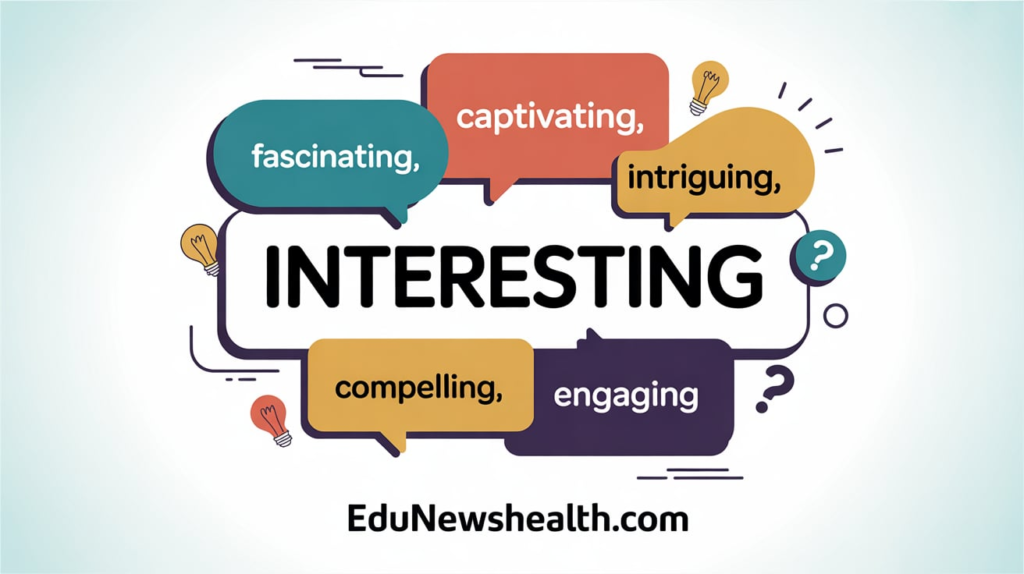
Expanding your vocabulary beyond “interesting” transforms your writing from ordinary to exceptional. The synonyms we’ve explored offer specific, powerful alternatives that clarify your meaning and engage your readers. Whether you choose “fascinating” for its sense of wonder, “compelling” for its persuasive force, or “captivating” for its magnetic pull, each word serves a distinct purpose and creates a unique impact.
Remember that effective writing isn’t about using the fanciest words available. It’s about selecting the right word for each specific situation. Match your vocabulary to your audience, context, and intended tone. Practice consistently, learn from examples, and don’t be afraid to experiment with new word choices.
Your readers will notice the difference. They’ll stay engaged longer, understand your message more clearly, and remember your content more vividly. The small effort of choosing better synonyms pays dividends in every piece you write. What word will you use instead of “interesting” in your next project? The choice is yours, and the possibilities are endless.
FAQs
What is the best synonym for “interesting” in formal writing?
For formal writing, “noteworthy,” “significant,” or “remarkable” work best. These words convey importance and substance without sounding casual. They maintain professional tone while adding specificity that “interesting” lacks.
Can I use “fascinating” and “interesting” interchangeably?
Not exactly. Fascinating suggests a higher degree of engagement and wonder than interesting. Use fascinating when something deeply captivates attention rather than simply being worth noting. The emotional intensity differs between these words.
How many times should I use synonyms in one article?
Vary your word choices throughout your content without forcing synonyms into every sentence. Aim for natural flow rather than hitting a specific number. If you find yourself using the same synonym repeatedly, mix in alternatives to maintain freshness.
Are there situations where “interesting” is the best choice?
Yes, in casual conversation or when you genuinely mean something is moderately noteworthy without being exceptional. Sometimes simple language serves your purpose better than elaborate alternatives. Trust your judgment about what fits best.
How do I remember which synonym to use when?
Create mental associations between words and their specific qualities. Link “intriguing” with mystery, “compelling” with persuasion, and “captivating” with holding attention. Practice using each word in context until these connections become automatic.
What if I use a synonym incorrectly?
Don’t let fear of mistakes prevent experimentation. Most readers are forgiving, and mistakes help you learn. When unsure about a word, check its definition and example sentences. Over time, correct usage becomes intuitive.
Do synonyms for “interesting” improve SEO?
Indirectly, yes. Varied vocabulary makes content more engaging, which can improve metrics like time on page and reduce bounce rates. These engagement signals can positively influence search rankings. Quality writing generally performs better in search results.
Should I replace every instance of “interesting” in my writing?
Not necessarily. Focus on places where more specific language adds clarity or impact. In casual dialogue or quoted speech, “interesting” might sound more natural. Edit strategically rather than automatically replacing every occurrence.
How long does it take to naturally use these synonyms?
With consistent practice, you’ll notice improvement within a few weeks. Natural usage typically develops over two to three months of conscious application. The timeline varies based on how frequently you write and practice.
Can using too many synonyms make my writing sound pretentious?
Yes, if you prioritize complex words over clarity. Always choose the simplest word that accurately conveys your meaning. Effective writing balances vocabulary variety with accessibility. Your goal is clear communication, not showing off your word knowledge.
Also Read : Change Synonym