

Best Easy Dinner Ideas for Kids That Actually Work 2026
Introduction
You know that feeling when it’s 5:30 PM and everyone’s hungry, but you have no idea what to make for dinner? You’re not alone. Finding easy dinner ideas for kids can feel like solving a puzzle every single night, especially when you’re dealing with picky eaters, tight schedules, and a pantry that seems half empty.
The good news is that feeding your kids doesn’t have to be complicated or stressful. You don’t need fancy ingredients or culinary school training to put together meals your children will actually eat. What you need are simple, tested recipes that come together quickly and satisfy even the pickiest little critics at your table.
This article walks you through practical dinner solutions that real parents use in real kitchens. You’ll find ideas that work for busy weeknights, strategies for dealing with picky eaters, and tips that make mealtime less of a battle and more of something everyone can enjoy together.
Why Simple Dinners Matter for Kids
Kids thrive on routine and familiarity. When you serve meals that are straightforward and recognizable, children feel more comfortable trying them. Complex dishes with unfamiliar textures or strong flavors often end up pushed around the plate instead of eaten.
Simple dinners also mean less stress for you. When you can prepare a meal in 30 minutes or less, you have more time for homework help, bath time, or just relaxing together as a family. Research shows that families who eat together regularly tend to have children with better nutrition, improved academic performance, and stronger emotional bonds.
Keep in mind that “easy” doesn’t mean unhealthy. Many simple meals pack in plenty of nutrients without requiring hours in the kitchen. The key is knowing which shortcuts actually work and which recipes your kids will ask for again and again.
Quick Pasta Dishes That Always Win
Pasta is every parent’s secret weapon. It cooks fast, kids love it, and you can sneak vegetables into the sauce without much protest. Here are some go-to options that work almost every time.
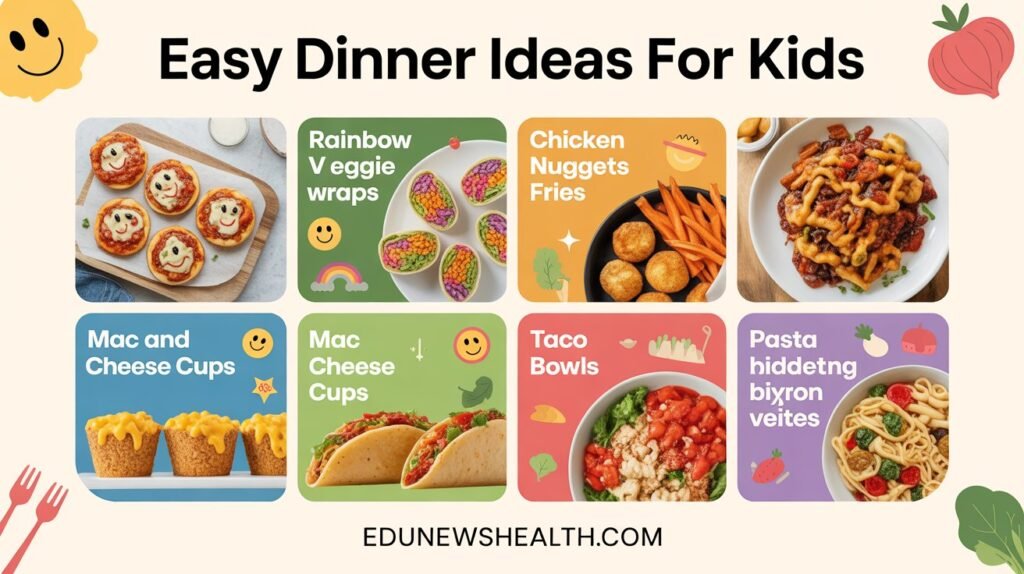
Mac and Cheese with Hidden Veggies
Start with your regular mac and cheese recipe, whether boxed or homemade. While the pasta cooks, steam some cauliflower or butternut squash until soft. Blend it smooth and stir it into the cheese sauce. The orange or yellow vegetables blend right in, and most kids never notice the difference. You’ve just added vitamins and fiber to a meal they already love.
One-Pot Spaghetti
Throw spaghetti, jarred marinara sauce, water, and some Italian seasoning into a large pot. Let everything cook together for about 15 minutes, stirring occasionally. The pasta absorbs the sauce as it cooks, creating a flavorful dish with only one pot to clean. Add frozen meatballs during the last five minutes if you want protein without extra effort.
Buttered Noodles with Parmesan
Sometimes the simplest option is the best one. Cook any pasta shape your kids like. Toss it with butter, grated Parmesan cheese, and a little pasta water to make it creamy. Serve alongside steamed broccoli or green beans. Not every meal needs to be elaborate to be satisfying and nutritious.
Protein-Packed Options Kids Actually Eat
Getting enough protein into your kids can be challenging, especially if they’re not big meat eaters. These easy dinner ideas for kids focus on proteins that children typically enjoy.
Chicken Nuggets Done Better
You don’t have to give up chicken nuggets entirely. Make a healthier version by cutting chicken breast into bite-sized pieces. Dip them in beaten egg, then roll them in crushed cornflakes or panko breadcrumbs mixed with a little Parmesan. Bake them at 400°F for about 15 minutes. They’re crispy, delicious, and way better than the frozen kind.
Taco Night Made Simple
Ground beef or turkey seasoned with taco spices cooks in less than 10 minutes. Set out small bowls with shredded cheese, lettuce, diced tomatoes, sour cream, and soft or hard taco shells. Let each kid build their own tacos. This approach gives children control over what they eat, which often leads to less mealtime resistance.
Breakfast for Dinner
Scrambled eggs, turkey sausage, and whole grain toast make a complete dinner that takes about 10 minutes total. Kids find breakfast foods comforting and familiar. Add some fruit on the side and you have a balanced meal that breaks the “what’s for dinner” monotony.
Easy One-Pan and Sheet Pan Meals
Cleaning up after dinner can be the worst part of cooking. One-pan meals solve that problem while still delivering nutrition and flavor.
Sheet Pan Chicken and Vegetables
Place chicken thighs or breasts on a baking sheet. Surround them with chunks of potatoes, carrots, and whatever vegetables you have on hand. Drizzle everything with olive oil and sprinkle with salt, pepper, and garlic powder. Roast at 425°F for 25 to 30 minutes. Everything cooks together and the cleanup is minimal.
Quesadillas with a Twist
Heat a large skillet and place a flour tortilla in it. Sprinkle one half with shredded cheese, some shredded rotisserie chicken, and a spoonful of black beans or corn. Fold the tortilla in half and cook until golden on both sides. Cut into triangles and serve with salsa or guacamole. You can make several in the time it takes to order takeout.
Stir-Fry in Minutes
Use a bag of frozen stir-fry vegetables to save chopping time. Heat oil in a large pan or wok. Add the vegetables and cook for about five minutes. Push them to the side and scramble a couple of eggs in the empty space. Mix everything together, add a splash of soy sauce, and serve over instant rice. Total time from start to finish is about 15 minutes.
Creative Ways to Serve Vegetables
Getting kids to eat vegetables might be your biggest dinner challenge. The trick is making them appealing without forcing the issue.
Dipping Makes Everything Better
Kids love to dip foods. Serve raw carrots, cucumber slices, cherry tomatoes, and bell pepper strips with ranch dressing or hummus. When vegetables come with a tasty dip, children are more likely to try them. You can also serve roasted broccoli with a cheese sauce for dipping.
Hide Them in Plain Sight
Finely chop spinach, zucchini, or mushrooms and mix them into spaghetti sauce, meatballs, or casseroles. When the pieces are small enough, they blend into the dish without changing the texture much. Your kids get the nutrients without the battle.
Make Vegetables Fun
Use cookie cutters to cut bell peppers or cucumbers into fun shapes. Arrange vegetables on the plate to look like a face or a simple design. It sounds silly, but presentation really does matter to children. When food looks interesting, they’re more willing to eat it.
Budget-Friendly Dinner Ideas
Feeding a family can get expensive. These easy dinner ideas for kids won’t break your budget.
Bean and Cheese Burritos
Canned refried beans cost less than a dollar and provide plenty of protein and fiber. Warm them up, spread them on a flour tortilla, add some shredded cheese, and roll it up. Heat in a pan or microwave until the cheese melts. Serve with rice and salsa. This meal costs just a few dollars total.
Soup and Grilled Cheese
Canned tomato soup paired with grilled cheese sandwiches is classic comfort food that kids love. Use whole grain bread and add a slice of turkey or ham to the sandwich for extra protein. This combination is filling, affordable, and comes together in about 10 minutes.
Pasta with Butter and Frozen Peas
Cook any pasta shape. During the last two minutes of cooking, add a cup of frozen peas right into the pot. Drain everything together, toss with butter and Parmesan cheese, and season with salt and pepper. This simple dish costs very little and provides carbohydrates, protein, and vegetables all in one bowl.
Make-Ahead Options for Busy Nights
Some nights are just too hectic for any cooking at all. Having make-ahead meals ready to go can save your sanity.
Freezer-Friendly Meatballs
Spend an hour one weekend making a big batch of meatballs. Bake them, let them cool, and freeze them in portions. When you need dinner, just take out what you need and heat them in marinara sauce or barbecue sauce. Serve over pasta, rice, or with a side of vegetables.
Slow Cooker Pulled Chicken
Put several chicken breasts in your slow cooker with a jar of salsa or barbecue sauce. Cook on low for six to eight hours. Shred the chicken with two forks. Use it for tacos, over rice, in quesadillas, or on slider buns. The chicken keeps in the fridge for several days and makes multiple meals easy.
Assembled Casseroles
Prepare casseroles like baked ziti or chicken and rice casserole up to the point of baking. Cover them tightly and refrigerate or freeze. When you need dinner, just pop the dish in the oven. You get a homemade meal without the weeknight stress.

Dealing with Picky Eaters
Picky eating is normal for many children, but it can make dinner time frustrating. Here are some strategies that help.
The One-Bite Rule
Ask your child to take at least one bite of everything on their plate. They don’t have to like it or finish it, but they do need to try it. Over time, repeated exposure to new foods often leads to acceptance and even enjoyment.
Involve Kids in Cooking
Children are more likely to eat foods they helped prepare. Let them stir ingredients, wash vegetables, or arrange items on a plate. Even small tasks give kids ownership of the meal and make them more invested in eating it.
Offer Choices Within Limits
Instead of asking “what do you want for dinner,” which can lead to unrealistic requests, offer two options you’re willing to make. “Do you want chicken nuggets or tacos tonight?” This gives your child some control while keeping things manageable for you.
Keep New Foods Separate
When introducing something new, serve it alongside familiar favorites. Don’t mix everything together. If your child doesn’t like the new food, they can still eat the other items on their plate without the meal becoming a total loss.
Time-Saving Kitchen Hacks
These tricks help you get dinner on the table faster without sacrificing quality.
Use Rotisserie Chicken
Grocery store rotisserie chickens are inexpensive and already cooked. Shred the meat and use it for tacos, pasta dishes, salads, soups, or casseroles. You skip the cooking time and still get homemade flavor.
Pre-Cut Vegetables
Yes, pre-cut vegetables cost a bit more. But if the extra couple of dollars means you’ll actually use them instead of letting fresh vegetables rot in the crisper drawer, they’re worth every penny. Time is money too.
Keep a Well-Stocked Pantry
Always have pasta, rice, canned beans, canned tomatoes, and basic seasonings on hand. With these staples, you can throw together a meal even when the fridge looks empty. Add some frozen vegetables and you’re set.
Batch Cook on Weekends
Spend an hour or two on the weekend cooking rice, browning ground beef, or chopping vegetables. Store everything in containers. During the week, you can assemble meals quickly using these prepared components.
Creating a Weekly Dinner Rotation
Having a loose plan takes the daily stress out of deciding what to make. You don’t need a rigid schedule, just some structure.
Theme Nights Simplify Planning
Assign themes to different nights of the week. Monday might be pasta night, Tuesday is taco night, Wednesday is chicken night, and so on. This framework narrows your choices and makes planning easier. Your kids will also know what to expect, which can reduce complaints.
Keep a List of Your Kids’ Favorites
Write down 10 to 15 meals your children actually eat without fuss. Post this list on the fridge or keep it in your phone. When you’re drawing a blank on dinner ideas, refer to your list. You’re not trying to be a gourmet chef every night. You’re just trying to feed your family well.
Allow for Flexibility
Plans change. Some nights you’ll be running late, or someone will be sick, or you just won’t feel like cooking. Keep backup options like frozen pizza, breakfast for dinner, or even takeout in your mental rotation. The goal is reducing stress, not creating more of it.
Balancing Nutrition Without the Fuss
You want your kids to eat healthy foods, but you also need meals that work in real life. Here’s how to find that balance.
Aim for “Good Enough” Nutrition
Not every meal needs to be perfectly balanced. If lunch and breakfast were nutritious, dinner can be simpler. Look at your child’s nutrition over the course of a week rather than stressing about every single meal. This perspective takes a lot of pressure off.
Sneak in Nutrients Where You Can
Add a handful of spinach to smoothies. Mix shredded carrots into spaghetti sauce. Use whole grain pasta instead of white. These small changes add up without making meals unrecognizable to your kids.
Model Good Eating Habits
Your children watch what you eat. If you eat vegetables and try new foods, they’re more likely to do the same. Sit down together for meals when possible and make it a pleasant experience rather than a battleground. The atmosphere around food matters as much as the food itself.
Conclusion
Finding easy dinner ideas for kids doesn’t have to feel overwhelming. The meals your family will eat regularly are often the simplest ones, built from familiar ingredients and straightforward preparation methods. You don’t need to cook something different every single night or impress anyone with culinary skills.
Start with a few recipes your kids already like and build from there. Use shortcuts that save time without sacrificing nutrition. Get your children involved when you can, and remember that some nights, good enough really is good enough.
What works for one family might not work for yours, and that’s perfectly fine. Pay attention to what your kids eat without complaint and what leaves you feeling less stressed. Those are the meals worth repeating. Over time, you’ll develop your own rotation of go-to dinners that make everyone at your table happy.
What’s one dinner your kids never refuse? Let that be your starting point this week.

FAQs
What are the easiest dinners to make for picky eaters?
Pasta with butter and cheese, quesadillas, chicken nuggets, and breakfast foods like scrambled eggs are usually safe bets. Keep the ingredients simple and separate rather than mixed together. Let kids customize their plates when possible by offering build-your-own options like tacos or pasta with various toppings.
How can I get my kids to eat vegetables at dinner?
Serve vegetables with dips like ranch dressing or cheese sauce. Cut them into fun shapes or arrange them creatively on the plate. Start with mild vegetables like carrots or cucumbers before introducing stronger flavors. Don’t force it, but do require at least one bite. Repeated exposure over time often leads to acceptance.
What’s a healthy dinner I can make in 15 minutes?
Scrambled eggs with whole grain toast and fruit takes about 10 minutes. A bag of frozen stir-fry vegetables with scrambled eggs and instant rice is ready in 15 minutes. Quesadillas filled with cheese and beans served with salsa also come together quickly and provide good nutrition.
How do I meal plan for kids on a budget?
Focus on inexpensive proteins like beans, eggs, and ground turkey. Buy frozen vegetables instead of fresh when possible since they’re cheaper and last longer. Make bigger batches of affordable meals like pasta dishes or soups that provide multiple servings. Keep staples like rice, pasta, and canned goods on hand so you always have something to work with.
Should I make my kids eat everything on their plate?
Most experts recommend against forcing kids to clean their plates. This can create negative associations with food and override their natural hunger cues. Instead, serve appropriate portions and require just one bite of new or disliked foods. Let children learn to recognize when they’re full rather than eating past that point.
What are good make-ahead dinners for busy families?
Casseroles, meatballs, pulled chicken or pork, and soups all freeze well and reheat easily. Prepare these on weekends when you have more time. Store them in portions that match your family size so you can pull out exactly what you need on busy weeknights.
How can I get my kids involved in making dinner?
Give age-appropriate tasks like washing vegetables, stirring ingredients, measuring dry goods, or setting the table. Older kids can help with simple cutting using safer tools or assembling items like tacos or pizzas. When children help prepare food, they’re more invested in eating it.
What protein options work for kids who don’t like meat?
Beans, cheese, eggs, and nut butters all provide protein. Greek yogurt, tofu, and fish like salmon or mild white fish are also good options. Many kids will eat black beans in quesadillas or burritos, even if they won’t eat ground beef. Experiment with different preparations to find what your child accepts.
How do I handle different food preferences among siblings?
Offer one main dish but provide simple sides that each child likes. Build-your-own meal formats work well since everyone can customize. Don’t become a short-order cook making separate meals for each child, but do include at least one item you know each child will eat at every meal.
What’s the best way to use leftovers for kids’ dinners?
Repurpose leftovers into new formats. Leftover chicken becomes quesadillas or fried rice. Cooked vegetables go into pasta dishes or omelets. Leftover rice turns into fried rice or goes into soup. When leftovers look different from the original meal, kids are often more willing to eat them again.
Also read edunewshealth.com
