


What is SEO and How It Works: A Beginner’s Guide 2026
Understanding SEO: Definition and Importance
Search Engine Optimization (SEO) is a digital marketing strategy aimed at improving a website’s visibility on search engines such as Google, Bing, and Yahoo. By optimizing various elements of a website, businesses can enhance their rankings in search results, making it easier for potential customers to find them. This increased visibility is crucial as a significant percentage of online traffic is driven by search engines.
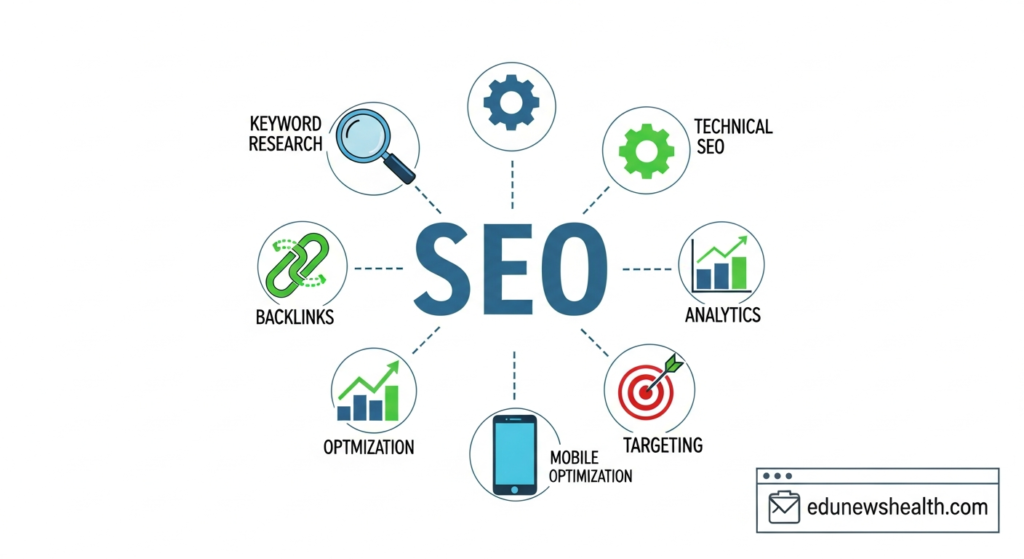
SEO encompasses a variety of techniques, including keyword research, on-page optimization, link building, and technical SEO, all of which contribute to a website’s overall performance. The primary focus is to ensure that the site is relevant and easily accessible to both search engines and users. Implementing effective SEO strategies not only elevates a site’s position in search results but also improves the user experience, leading to increased engagement and conversion rates.
The long-term benefits of investing time and resources into SEO are substantial. Unlike paid advertising, which ceases to deliver traffic once the budget runs out, SEO establishes a sustainable approach to gaining organic traffic. This makes SEO a cost-effective solution for businesses seeking to build their online presence. The compounding effects of organic rankings can lead to consistent traffic over time, ultimately translating into higher revenues.
In today’s digital age, the importance of SEO cannot be overstated. As more consumers turn to the internet for product research and purchasing decisions, businesses without effective SEO strategies risk falling behind their competitors. Additionally, effective SEO practices contribute to better user experience by ensuring that relevant content is easily discoverable. Therefore, understanding and implementing SEO is essential for any online business aiming to succeed in an increasingly competitive market.
Understanding Search Engine Mechanics
Search engines play a crucial role in navigating the vast expanse of the internet. At their core, they operate through a structured process involving crawling, indexing, and retrieval of information. Crawling is the initial phase where search engine bots, often referred to as spiders or crawlers, systematically browse the web to discover new and updated pages. They follow links across websites, gathering a comprehensive view of the content available online.
Once a web page is crawled, it enters the indexing stage. Indexing is the process of storing and organizing the collected data in an extensive database. This database serves as the foundation for search engines when generating results for user queries. The effectiveness of indexing directly impacts the relevance and timeliness of the retrieved search results.
The subsequent retrieval process hinges on sophisticated algorithms designed to evaluate various factors and deliver the most pertinent results. These algorithms assess many criteria, including the context of the search query, on-page optimization, and the site’s overall authority. A significant aspect of this evaluation revolves around keywords, which are pivotal in matching user searches with relevant content. The inclusion and strategic placement of keywords within a page’s content are critical in determining how well a website ranks for specific queries.
Several additional factors influence a website’s ranking in search engine results. Page speed is paramount, as users prefer fast-loading pages. Mobile-friendliness is another essential factor, reflecting the growing trend of mobile internet use. Finally, backlinks — links from other reputable websites — are considered votes of confidence, enhancing a site’s credibility and authority. By understanding these mechanics, website owners can optimize their content effectively, ensuring better visibility and engagement in search engine results.
Core Components of SEO
Search Engine Optimization, commonly abbreviated as SEO, is comprised of three core components: on-page SEO, off-page SEO, and technical SEO. Understanding these components is essential for effectively enhancing a website’s visibility in search engine results.
On-Page SEO focuses on optimizing individual web pages to improve their rankings in search engines. Key elements include keyword optimization, where specific keywords relevant to the content are strategically incorporated into titles, headings, and body text. This practice helps search engines understand the content better and improves its relevance. Another critical aspect is content quality; content must be informative, engaging, and valuable to the reader. Additionally, meta tags play a pivotal role in on-page SEO. These tags provide concise information about a webpage’s content to search engines, aiding in indexing and improving click-through rates.
Off-Page SEO encompasses all activities carried out away from the website to boost its position in search rankings. This typically involves link-building strategies, wherein external websites link back to a given webpage, indicating authority and relevance to search engines. The quality and trustworthiness of these linking sites can significantly impact rankings. Furthermore, social media influence is becoming increasingly essential; sharing content across social platforms can drive traffic and enhance a website’s online presence, indirectly affecting its search performance.
Technical SEO deals with the behind-the-scenes aspects that affect a website’s performance. Important factors include website structure, which should allow search engines to crawl and index site contents efficiently. The loading speed of a website is also crucial; a faster site improves user experience and retention. Lastly, with the rise of mobile internet usage, mobile optimization ensures that a website is accessible on various devices, providing a seamless browsing experience and contributing to higher search rankings.
Getting Started with Your SEO Strategy
Embarking on your SEO journey requires a structured approach that begins with understanding the essential elements of search engine optimization. The first step in this process is conducting thorough keyword research. Identifying relevant keywords and phrases that potential customers use to search for products or services will inform your content creation strategy. Tools such as Google Keyword Planner, Ahrefs, or SEMrush can assist in discovering high-volume, low-competition keywords that should be targeted.
Once you have established your keywords, the next phase is content creation. Craft high-quality, engaging, and informative content that addresses the needs of your audience while naturally incorporating your chosen keywords. It is crucial to maintain readability; content should be written clearly and concisely to ensure it resonates with the target demographic. Additionally, consider optimizing content for featured snippets by structuring it to answer common questions concisely.
Utilizing various SEO tools is vital for ongoing optimization. Platforms like Yoast SEO for WordPress or Moz can provide actionable insights into how to improve your site’s performance in search engine rankings. These tools offer keyword suggestions, readability analysis, and help with technical SEO aspects that are often overlooked.
Monitoring your SEO performance is just as important as implementing the strategy. This involves using analytics tools like Google Analytics to understand user behavior, page performance, and overall traffic metrics. Regularly examining these metrics will help you identify what is working and what requires adjustment.
Continuous improvement is the backbone of a successful SEO strategy. Stay informed about changes in search algorithms and industry trends to adapt your methods accordingly. Through consistent effort and an iterative approach, you can steadily enhance your website’s visibility and performance in search engine results.