
Oak Street Health Pros and Cons: Honest Weird Wealth Co Review 2025/2026
Introduction
If you or someone you love is on Medicare, you have probably heard the name Oak Street Health come up more than once. Maybe a neighbor recommended it. Maybe you saw a clinic open up in your area and wondered what it actually offers. And maybe, like a lot of people, you are not entirely sure whether it lives up to the buzz.
At Weird Wealth Co, we believe you deserve straight talk, not marketing fluff. So we did the research, dug into real patient experiences, and put together this honest breakdown of oak street health pros and cons. By the end of this article, you will know exactly what Oak Street Health is, who it works best for, where it falls short, and whether it is worth your time and trust.
This guide covers everything: the business model, the care model, the real benefits, the genuine drawbacks, and the questions people ask most. Let us get into it.
What Is Oak Street Health?
Oak Street Health is a network of primary care clinics built specifically for adults on Medicare. It was founded in 2012 in Chicago and has since expanded to hundreds of locations across more than 20 states in the United States.
The company operates on a value-based care model. That means it gets paid based on patient outcomes, not the number of visits or procedures. This is a big deal because traditional fee-for-service medicine gives doctors a financial reason to see you more. Oak Street Health flips that around.
CVS Health acquired Oak Street Health in 2023 for roughly 10.6 billion dollars. The acquisition raised some eyebrows, and for good reason. We will talk about what that means for patients later.
Oak Street Health serves low to moderate income Medicare patients, many of whom are dealing with multiple chronic conditions. Its clinics are often located in underserved communities where access to quality primary care has historically been limited.
How Oak Street Health Works
Before diving into oak street health pros and cons, you need to understand how it actually works.
When you become a patient at Oak Street Health, you are assigned a care team. That team includes a primary care doctor, a nurse, a care coordinator, and sometimes a social worker or behavioral health specialist. Everyone works together on your care.
Oak Street Health clinics also offer:
- Extended appointment times (usually 30 to 60 minutes instead of the usual 10 to 15)
- Transportation assistance to and from appointments
- Same-day or next-day appointments for urgent needs
- 24/7 phone access to a care team member
- Chronic disease management programs
- Preventive screenings and wellness programs
- Health education classes and community events
The goal is to keep you healthy and out of the hospital. That benefits you and, under the value-based model, it benefits them too.
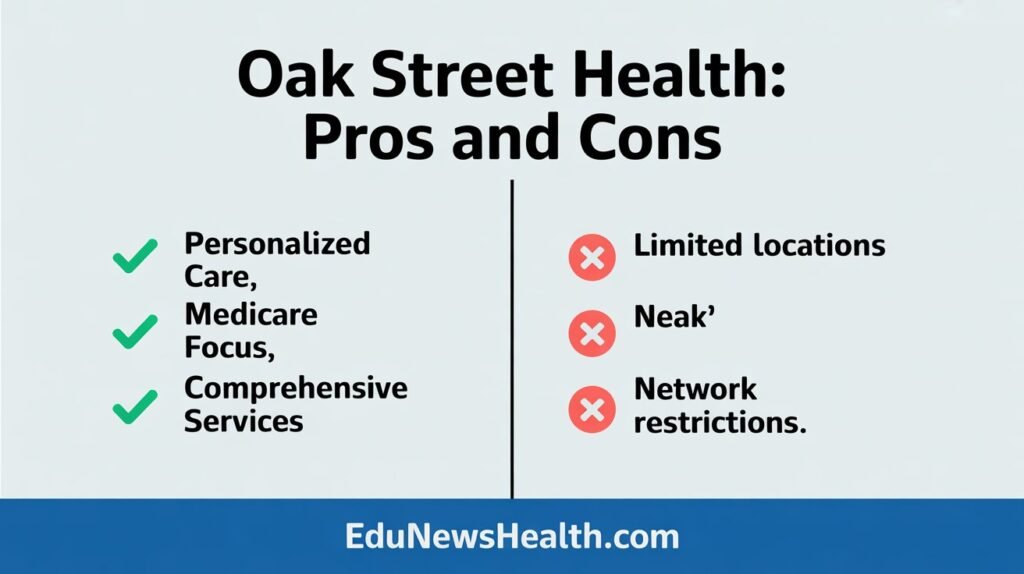
Oak Street Health Pros and Cons at a Glance
Here is a quick snapshot before we go deeper:
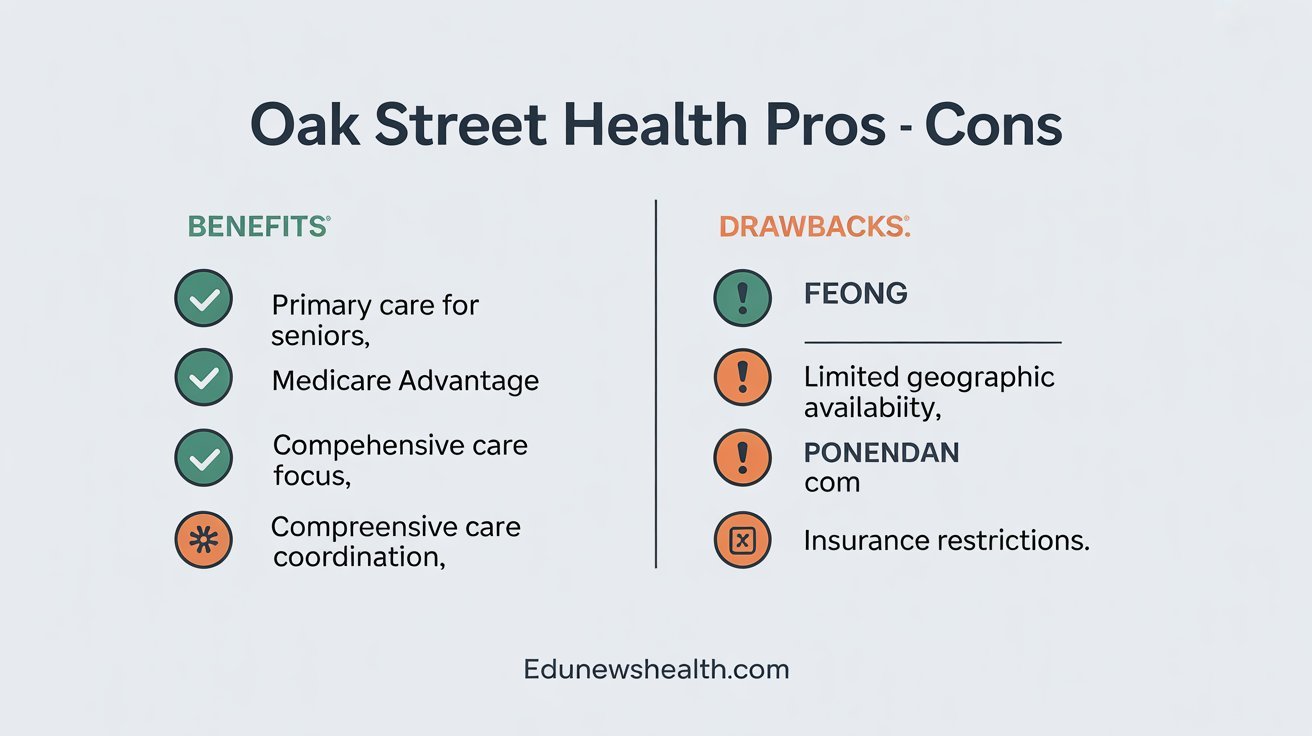
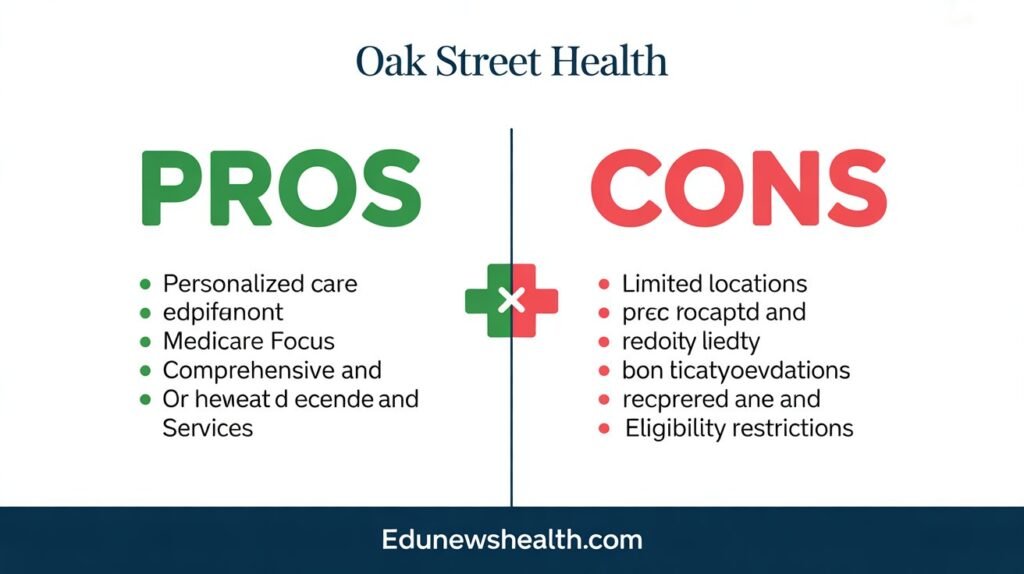
Pros
- Focused entirely on Medicare patients
- Longer appointment times
- Integrated care team approach
- Strong preventive care focus
- Transportation support
- 24/7 care access
- Great for patients with complex or multiple conditions
Cons
- Not available everywhere
- Post-CVS acquisition concerns about mission drift
- Limited to Medicare patients only
- Some patients report inconsistency across locations
- Referral networks can be limited depending on your area
Now let us break each of these down the right way.
The Real Pros of Oak Street Health
1. They Actually Spend Time With You
This is the one thing patients mention over and over again. At Oak Street Health, appointments are not rushed. You are not in and out in seven minutes. You get a real conversation with your doctor.
For seniors managing diabetes, heart disease, hypertension, or multiple conditions at once, this matters enormously. You have time to ask questions. You have time to understand your treatment. You feel like a person, not a number.
Weird Wealth Co has reviewed dozens of patient testimonials, and this theme comes up constantly. Long appointment times are not a gimmick. They are central to how the model works.
2. The Care Team Model Is Genuinely Effective
Most primary care offices give you one doctor and maybe a nurse. Oak Street Health gives you a whole team. Your care coordinator tracks your health between visits. Your social worker helps you navigate housing, food access, or financial stress that can affect your health.
This is what real integrated care looks like. Research consistently shows that coordinated, team-based care leads to better outcomes for patients with chronic conditions.
3. Preventive Care Is a Priority
Oak Street Health builds its business around keeping you out of the hospital. That means they invest heavily in preventive care. They track your screenings, your vaccinations, your lab work, and your follow-ups.
For Medicare patients who might otherwise fall through the cracks, this kind of proactive attention can genuinely extend quality of life. Studies on value-based care models like this one show reductions in emergency room visits and hospitalizations.
4. Transportation Support Removes a Real Barrier
For many seniors, getting to a doctor is a logistical challenge. Oak Street Health provides rides to and from appointments at many of its locations. This removes one of the most common reasons elderly patients skip care.
It sounds like a small thing. It is not. Transportation barriers are one of the leading causes of missed appointments and unmanaged chronic illness in the Medicare population.
5. 24/7 Access Reduces Unnecessary ER Visits
When something feels off at 2 a.m., where do most seniors go? The emergency room. That is expensive, stressful, and often unnecessary.
Oak Street Health gives you 24/7 phone access to a care team member. Someone can talk you through your symptoms, assess your situation, and either reassure you or direct you to the right level of care. This alone can save enormous stress and money.
6. Community Focus Makes a Difference
Oak Street Health often places clinics in areas that have been underserved by the healthcare system for decades. Many of their patients are from communities where seeing a doctor regularly was never a realistic option.
Weird Wealth Co believes that healthcare access is a financial wellness issue too. When you manage chronic disease poorly, the downstream costs are devastating. Oak Street Health tries to catch problems before they become expensive crises.
The Real Cons of Oak Street Health
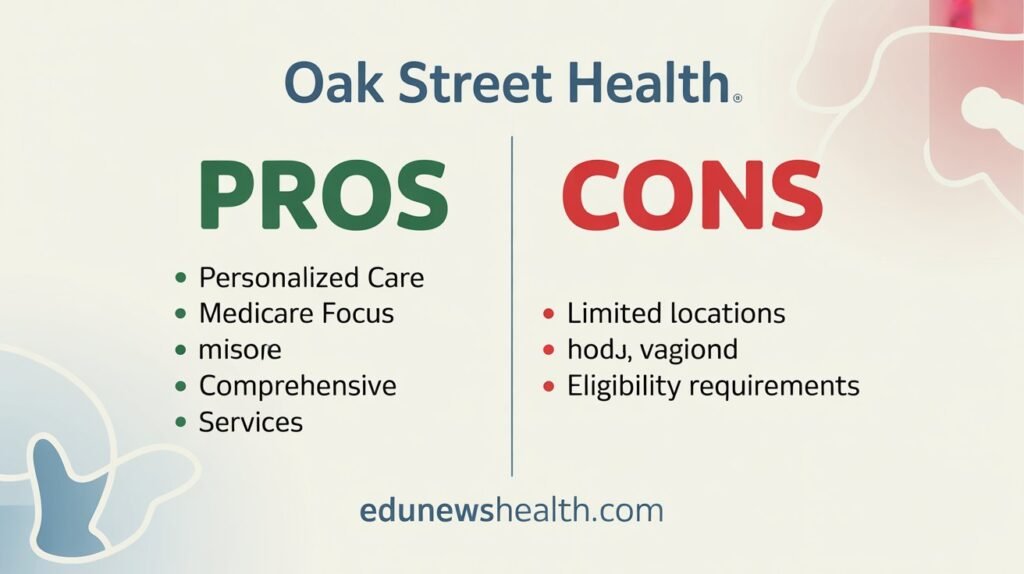
1. Limited Geographic Availability
Oak Street Health has expanded aggressively, but it is still not available everywhere. If you live in a rural area or a state where they have not yet built clinics, this model is simply not an option for you.
Always check their website for clinic locations before getting excited about what they offer. Availability varies widely by region.
2. The CVS Acquisition Raises Legitimate Questions
When CVS Health bought Oak Street Health for around 10.6 billion dollars in 2023, it was a massive deal. CVS is also the parent company of Aetna, a major insurance carrier.
This creates a potential conflict of interest. Oak Street Health operates best when it is making decisions purely in your health interest. When a parent company also controls the insurance paying for your care, that independence can become murkier.
It is worth watching. The mission so far has remained largely intact, but patients and advocates are right to monitor this relationship closely. Weird Wealth Co recommends you pay attention to any changes in the quality or nature of care over time.
3. Only for Medicare Patients
Oak Street Health does not serve patients under 65 unless they qualify for Medicare due to disability. If you are 62 and on a private plan, this is not your clinic.
This narrow focus is part of what makes them effective. But it does limit who can benefit.
4. Quality Can Vary by Location
Like any large healthcare organization, Oak Street Health is not perfectly consistent across every clinic. Some locations have exceptional care teams. Others have experienced high turnover or administrative challenges.
Patients in some cities report excellent experiences. Patients in others report frustrating wait times, billing confusion, or difficulty getting referrals. Read local reviews before choosing a specific location.
5. Referral Networks May Be Limited
Oak Street Health handles primary care well. But when you need a specialist, the strength of your referral network matters a lot. Depending on your market, the options Oak Street Health can refer you to may be limited.
Ask your care team directly about their specialist relationships in your area before you commit.
Who Is Oak Street Health Best For?
Based on everything Weird Wealth Co has reviewed, Oak Street Health is best for:
- Medicare beneficiaries managing multiple chronic conditions
- Seniors who have felt rushed or ignored in traditional primary care settings
- Patients in communities that have historically lacked quality healthcare access
- Anyone who struggles with transportation to medical appointments
- People who want proactive, preventive care rather than reactive treatment
It is not the best fit for:
- People who are not on Medicare
- Those living in areas without a clinic nearby
- Patients who prefer a single long-term physician relationship over a team model
- People with very specialized or complex needs that require immediate specialist access
What Real Patients Are Saying
Patient feedback across review platforms and healthcare surveys tells a consistent story.
Positive reviews almost always highlight the same things: more time with the doctor, feeling genuinely cared for, and help navigating the complexity of Medicare and chronic disease management.
Negative reviews tend to cluster around inconsistency, difficulty reaching someone during busy periods, and occasional frustration with billing or insurance navigation after the CVS acquisition.
Weird Wealth Co wants you to know that no healthcare provider has a perfect record. What matters is the pattern. For Oak Street Health, the pattern of positive feedback is strong, particularly for its core mission population.
Oak Street Health vs Traditional Primary Care
Here is how the models compare on the things that matter most to Medicare patients:
Appointment Time Traditional primary care: 7 to 15 minutes. Oak Street Health: 30 to 60 minutes.
Care Team Traditional: Usually one physician. Oak Street Health: Doctor plus nurse, coordinator, sometimes a social worker.
Preventive Focus Traditional: Reactive. Oak Street Health: Proactive and preventive.
After-Hours Access Traditional: Limited or none. Oak Street Health: 24/7 phone access.
Transportation Traditional: None. Oak Street Health: Available at many locations.
Cost to Medicare Patient Both accept Medicare. Out-of-pocket costs depend on your specific plan.
Financial Angle: Why Weird Wealth Co Cares About This
You might wonder why Weird Wealth Co is covering healthcare at all. Here is the truth: healthcare is one of the biggest financial risks for anyone over 65. An unmanaged chronic condition does not just hurt your health. It drains your savings, strains your family, and can completely derail retirement.
When Weird Wealth Co looks at oak street health pros and cons from a financial wellness angle, the model makes sense. Preventing hospitalizations, managing chronic disease proactively, and offering 24/7 support are not just health benefits. They are financial protection strategies.
A single preventable hospitalization can cost tens of thousands of dollars. If Oak Street Health keeps you out of the hospital twice in five years, the value of that care is enormous.
Conclusion: Is Oak Street Health Worth It?
After everything, here is the honest answer.
For Medicare patients who want proactive, coordinated, team-based care, especially those managing chronic conditions or living in underserved communities, Oak Street Health is one of the most genuinely patient-centered options available today.
The oak street health pros and cons are not perfectly balanced. The pros are strong and backed by real outcomes data. The cons are real but manageable if you do your homework on your local clinic.
The CVS acquisition is worth watching. The geographic limitations are real. But the core model, longer appointments, a full care team, preventive focus, transportation help, and 24/7 access, is genuinely valuable.
At Weird Wealth Co, our honest take is this: if you or your parent is on Medicare and there is an Oak Street Health clinic nearby, it is worth exploring seriously. Schedule a visit, ask direct questions about their care team and referral network, and judge the experience for yourself.
Have you or someone you know tried Oak Street Health? We would love to hear your experience. Drop your thoughts and help others in the community make a more informed choice.
Frequently Asked Questions
1. Is Oak Street Health free for Medicare patients? Oak Street Health accepts Medicare, and most services are covered. Your out-of-pocket costs depend on your specific Medicare plan. Many patients pay little to nothing for primary care visits.
2. Can I keep my current doctor if I join Oak Street Health? Oak Street Health becomes your primary care provider. You can still see specialists, but your main care shifts to their team.
3. Does Oak Street Health accept Medicare Advantage? Yes. Oak Street Health works with many Medicare Advantage plans. Check with your specific plan to confirm coverage at your local clinic.
4. Is Oak Street Health only for seniors? It primarily serves adults 65 and older on Medicare. However, younger adults who qualify for Medicare due to disability may also be eligible.
5. What happened to Oak Street Health after CVS bought it? CVS Health completed the acquisition in 2023. Clinics continue to operate under the Oak Street Health brand with the same value-based care model, though some patient advocates are monitoring for changes.
6. How do I find an Oak Street Health near me? Search for Oak Street Health clinic locations on their official website using your zip code.
7. Does Oak Street Health offer mental health services? Some locations offer behavioral health support as part of their integrated care model. Availability varies by clinic.
8. How does Oak Street Health make money? It operates on a value-based care model where it earns more when patients stay healthy and out of the hospital, rather than by charging per visit or procedure.
9. Is Oak Street Health better than a regular primary care doctor? For Medicare patients with complex or chronic conditions, many people find the team-based model and longer appointments significantly more satisfying and effective than traditional primary care.
10. What should I ask before joining Oak Street Health? Ask about the care team assigned to you, specialist referral options in your area, transportation availability, and how billing is handled with your specific Medicare plan.
Also Read Edunewshealth.com
About the Author: This article was written by the editorial team at Weird Wealth Co, a personal finance and wellness platform dedicated to helping everyday people make smarter decisions about money, health, and life. Weird Wealth Co covers topics that sit at the intersection of financial security and real-world wellbeing, from healthcare costs to retirement planning, always with a straight-talking, reader-first approach.