
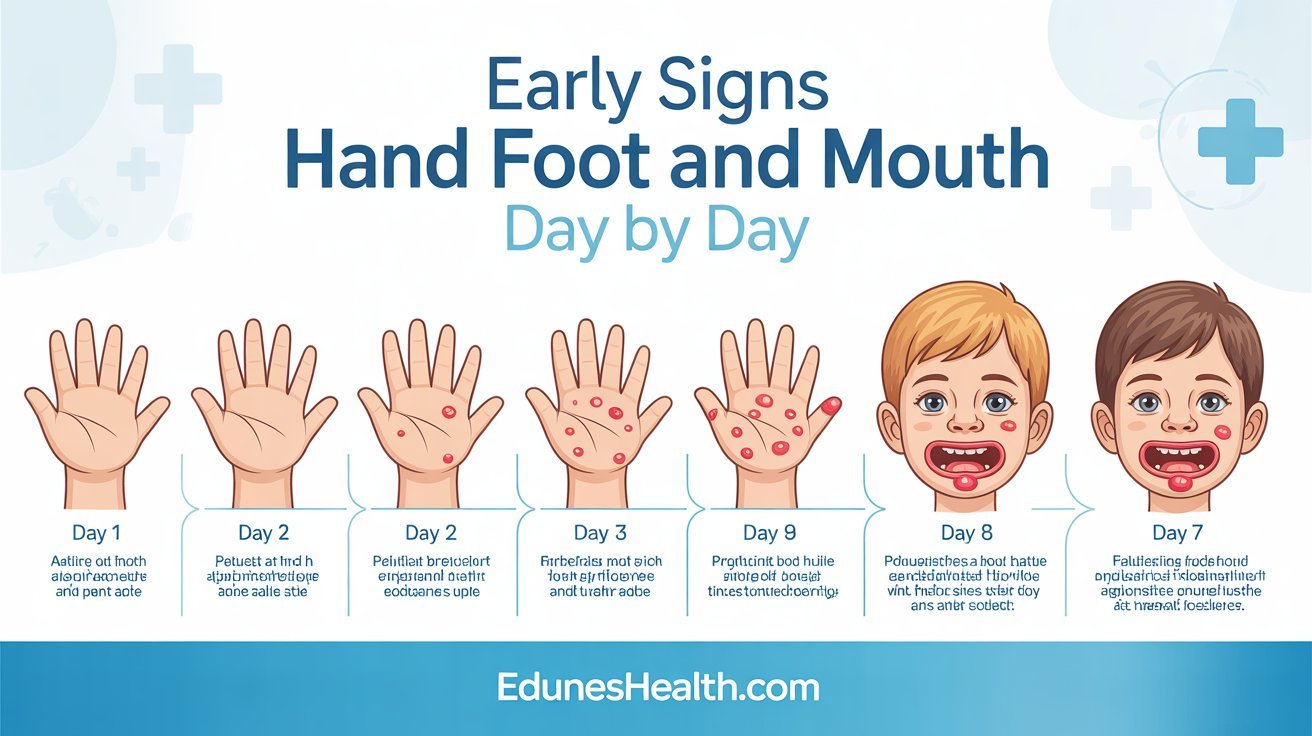
Early Signs Hand Foot and Mouth Day by Day Spread You Must Know
Introduction
Early Signs Hand Foot and Mouth Day by Day. Your child woke up cranky, refused breakfast, and feels warm to the touch. Sound familiar? You check their mouth and notice small red spots forming near the back of their throat. Before you panic, take a breath. You might be looking at the early signs of hand foot and mouth disease, and catching it early makes all the difference.
Hand foot and mouth disease (HFMD) is one of the most common childhood illnesses, especially in children under 5. According to the Centers for Disease Control and Prevention (CDC), HFMD spreads easily through direct contact, respiratory droplets, and contaminated surfaces. It moves fast. That is exactly why understanding the early signs of hand foot and mouth disease day by day can help you stay ahead of it.
This article walks you through every stage of the illness, from the very first subtle clues to full recovery. You will know what to expect, how to manage symptoms at home, when to call the doctor, and how to keep the virus from spreading to others in your household.
What Is Hand Foot and Mouth Disease?
Hand foot and mouth disease is a contagious viral illness caused most commonly by coxsackievirus A16 or enterovirus A71. It affects mostly infants and young children, though teenagers and adults can catch it too.
The name tells you exactly where the symptoms show up: the hands, feet, and mouth. But the illness starts before any of those visible signs appear, which is why parents often miss the window to act early.
Who Gets It Most?
Children under 5 years old carry the highest risk. Kids in daycare and preschool settings are especially vulnerable because the virus spreads through close contact. A 2021 review published in the journal Viruses noted that outbreaks peak during summer and early fall in temperate climates.
Adults can get it, but symptoms tend to be milder or sometimes not noticeable at all.
The Early Signs of Hand Foot and Mouth Disease Day by Day
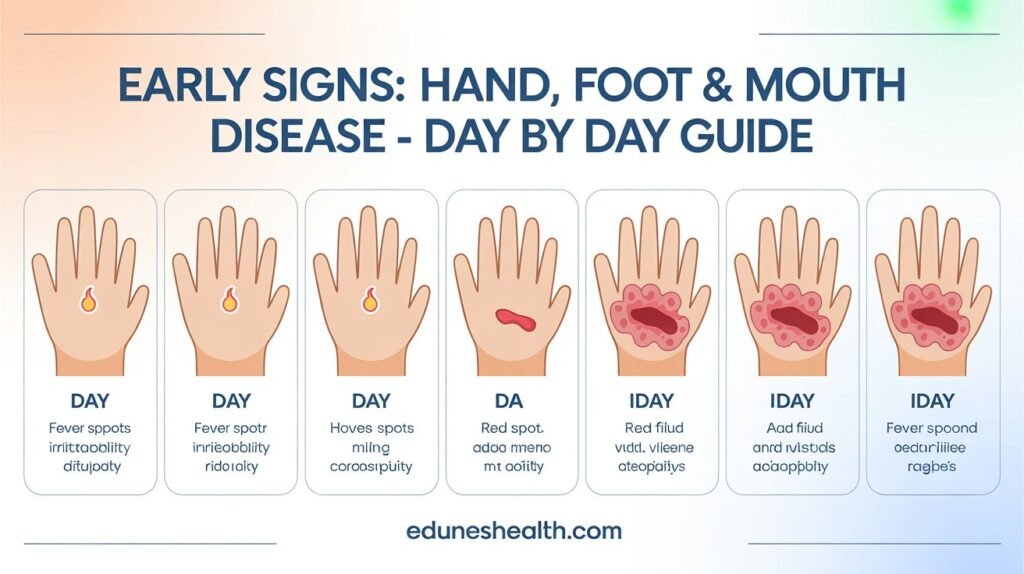
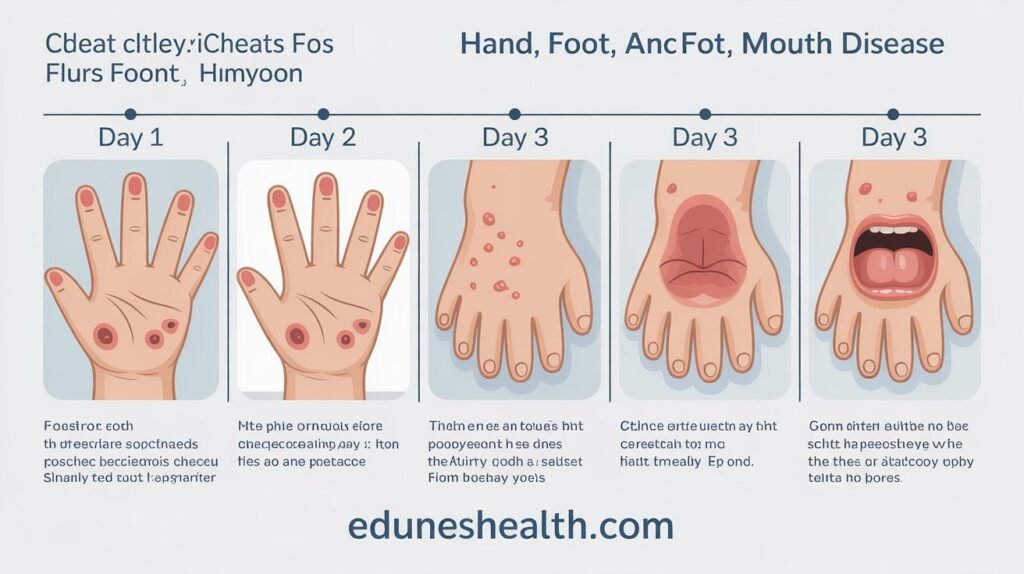
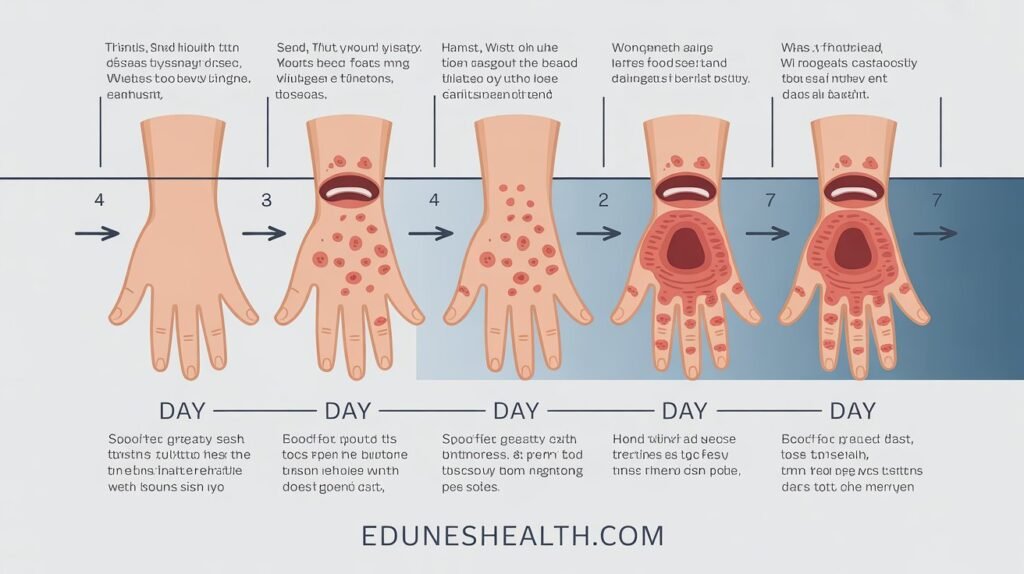
Understanding how HFMD progresses day by day helps you act faster and smarter. Here is a clear breakdown of what happens from Day 0 through full recovery.
Day 0 to Day 1: The Silent Start (Incubation Period)
Before symptoms appear, the virus is already active in the body. The incubation period for HFMD is typically 3 to 6 days after exposure. During this time, your child may seem completely fine, but the virus is replicating quietly.
This is also when the child is already contagious. Many parents do not realize this. Your child can spread the virus before showing a single sign.
What to watch for:
- No visible symptoms yet
- Mild fatigue or clinginess (easy to miss)
- Slightly reduced appetite
Day 1 to Day 2: The First Warning Signs
This is when most parents first notice something is off. The early signs of hand foot and mouth disease at this stage are easy to confuse with a common cold or teething.
Key symptoms include:
- Fever (usually between 101°F and 103°F or 38.3°C to 39.4°C)
- Sore throat
- General irritability and fussiness
- Poor appetite
- Runny nose or mild congestion
- Drooling more than usual (because swallowing hurts)
The fever typically comes first. It shows up suddenly and catches most parents off guard. Your child may refuse to eat or drink, which increases the risk of dehydration.
At this stage, I always recommend starting to offer cold fluids and soft foods. It helps soothe the throat before the sores develop.
Day 2 to Day 3: Mouth Sores Appear
By day 2 or 3, painful sores begin forming inside the mouth. These are small, red spots that quickly blister and then ulcerate. They show up on the tongue, the inside of the cheeks, the gums, and the back of the throat.
These sores are the reason your child refuses to eat or drink. Swallowing becomes genuinely painful. This is when dehydration becomes a real concern, especially in toddlers and infants.
What the mouth sores look like:
- Small red spots, about 2 to 3 mm wide
- They blister and then break open, leaving shallow ulcers
- Surrounded by a reddish border
- Usually 3 to 10 sores total
If your child suddenly starts crying at every sip of water, check inside their mouth. You will likely see the sores by now.
Day 3 to Day 4: The Rash Shows Up on Skin
This is when hand foot and mouth disease gets its name. The characteristic skin rash begins appearing on the hands, feet, and sometimes the buttocks, legs, and arms.
What the rash looks like:
- Flat red spots or small bumps
- Some bumps develop into blisters with a red base
- They are usually not itchy, though some children find them uncomfortable
- The blisters are firm and filled with fluid
- On the palms and soles, they can look like tiny oval or elongated lesions
The rash on the hands and feet is one of the most recognizable signs of HFMD. Unlike chickenpox, the blisters in HFMD are generally not itchy and do not appear on the scalp.
In some children, the rash also appears on the buttocks or diaper area. This is more common in toddlers.
Day 4 to Day 5: Peak Discomfort
By now, your child is likely at their most uncomfortable. The mouth sores are fully developed, the skin rash has spread to its widest, and the fever may still be lingering.
Common symptoms at peak stage:
- Persistent fever (may spike again)
- Complete refusal to eat solid food
- Difficulty drinking fluids
- Extreme irritability
- Trouble sleeping
- Possible nausea in older children
This is also when parents tend to visit the doctor most. If your child has not urinated in 8 hours or is showing signs of dehydration (dry mouth, no tears when crying, sunken eyes), seek medical attention immediately.
Day 5 to Day 7: Improvement Begins
Most children start to feel better around day 5 or 6. The fever usually breaks first. The mouth sores begin to heal, making eating and drinking less painful.
Signs of improvement:
- Fever subsides or disappears
- Appetite slowly returns
- Child becomes less fussy
- Mouth sores start to close up
- Energy levels improve
The skin blisters take a little longer to clear up. They typically dry out and peel over the next few days without leaving scars. You should not pop or pick at the blisters.
Day 7 to Day 10: Recovery Phase
By day 7 to 10, most children with hand foot and mouth disease have fully recovered. The sores are healed. The rash has faded. Energy is back to normal.
However, one thing surprises many parents during recovery: nail shedding. Some children lose their fingernails or toenails 4 to 8 weeks after an HFMD infection. This is called onychomadesis. It sounds alarming, but the nails grow back normally and no treatment is needed.
How HFMD Spreads Day by Day
Understanding how the virus spreads helps you contain it quickly once you recognize those early signs.
HFMD spreads through:
- Direct contact with blister fluid
- Saliva or nasal mucus of an infected person
- Stool (fecal-oral route, especially important in diaper changes)
- Contaminated surfaces like toys, doorknobs, and shared utensils
- Respiratory droplets from sneezing or coughing
The virus is most contagious during the first week of illness. But here is the tricky part: the stool can carry the virus for several weeks after the child feels completely better. This means hand hygiene stays critical even after recovery.
How Long Is a Child Contagious?
Your child is most contagious during the first 7 days. But to be safe, most doctors recommend keeping children home from school or daycare until the fever is gone and the blisters have dried up completely.
How to Manage Symptoms at Home
There is no antiviral medication for HFMD. Treatment focuses on keeping your child comfortable while the immune system does its job.
For Fever and Pain
- Give acetaminophen (paracetamol) or ibuprofen (for children over 6 months) as directed
- Do not give aspirin to children
- Use a cool, damp cloth on the forehead for comfort
- Keep room temperature comfortable, not too hot
For Mouth Sores
- Offer cold, soft foods like yogurt, ice cream, smoothies, and applesauce
- Avoid acidic or salty foods (citrus juice, chips) because they sting the sores
- Give cold water or cold milk frequently in small sips
- A saltwater rinse can help older children reduce discomfort
- Ask your doctor about mouth numbing gels for temporary relief
For the Skin Rash
- Keep the blisters clean and dry
- Do not break or pop the blisters
- Loose, soft clothing reduces friction and irritation
- Calamine lotion can soothe mild discomfort if the rash feels itchy
Keeping Your Child Hydrated
Hydration is the biggest priority. Mouth sores make drinking painful, which puts young children at risk of dehydration quickly.
Signs of dehydration to watch for:
- No wet diaper in 8 hours
- Dry mouth and lips
- No tears when crying
- Sunken eyes or soft spot on the skull (in infants)
- Unusual lethargy or sleepiness
If any of these appear, call your doctor right away.
When to See a Doctor
Most cases of HFMD resolve on their own without complications. But you should call your doctor if:
- Your child is under 6 months old
- Fever exceeds 104°F (40°C) or lasts more than 3 days
- Signs of dehydration appear
- Your child becomes unusually sleepy or difficult to wake
- The rash looks infected (red streaks, pus, increased swelling)
- Symptoms seem to be worsening after day 5
Serious complications from HFMD are rare but possible. Enterovirus A71, in particular, has been linked to neurological complications like viral meningitis, encephalitis, and acute flaccid paralysis in some cases. These are uncommon, but knowing the warning signs keeps you prepared.
Warning Signs That Need Emergency Care
Go to the emergency room if your child shows:
- Stiff neck or severe headache
- Seizures
- Difficulty breathing
- Extreme confusion or unresponsiveness
- Rapid worsening of symptoms
HFMD in Teenagers and Adults
Adults and teenagers can get HFMD, though the immune system usually handles it more effectively. Symptoms tend to be milder and may include only a mild sore throat, small mouth sores, or a faint rash.
However, adults can still spread the virus to young children even if their own symptoms seem insignificant. If you have been exposed to a child with HFMD and develop any of these signs, practice strict hand hygiene and avoid close contact with infants.
How to Prevent the Spread of HFMD at Home
Once HFMD enters your home, stopping it from spreading feels like a full-time job. Here are the most effective steps:
Hygiene habits that actually work:
- Wash hands thoroughly with soap and water for at least 20 seconds, especially after diaper changes, before meals, and after using the toilet
- Disinfect frequently touched surfaces with a diluted bleach solution or an EPA-registered disinfectant
- Do not share utensils, cups, toothbrushes, or towels
- Wash bedding, pajamas, and stuffed animals regularly
- Keep the sick child away from siblings and other children as much as possible
At daycare or school:
Keep your child home until they are fever-free for 24 hours and their blisters have completely dried. Notify the school or daycare so they can alert other parents and increase cleaning protocols.
Frequently Asked Questions
1. What are the very first signs of hand foot and mouth disease? The earliest signs are fever, sore throat, and general irritability. These appear 1 to 2 days before the mouth sores or skin rash develop. A sudden drop in appetite and increased drooling often follow shortly after.
2. How long does hand foot and mouth disease last in total? Most cases clear up within 7 to 10 days. The fever usually breaks first, followed by healing of the mouth sores and then the skin blisters.
3. Can adults get hand foot and mouth disease? Yes, adults can get HFMD, but symptoms are often milder. Adults can still spread the virus to children even with minimal symptoms.
4. Is hand foot and mouth disease dangerous? For most children, it is a mild illness that resolves on its own. Serious complications are rare but can occur with certain viral strains like enterovirus A71. Seek emergency care if your child shows signs of neurological symptoms.
5. How do you treat hand foot and mouth disease at home? There is no specific antiviral treatment. Focus on managing fever with appropriate pain relievers, keeping your child hydrated with cold fluids, and offering soft cool foods to ease mouth pain.
6. How contagious is hand foot and mouth disease? It is highly contagious, especially during the first week. The virus spreads through direct contact, saliva, blister fluid, respiratory droplets, and stool. The stool can remain contagious for weeks after recovery.
7. When can my child go back to school after HFMD? Most doctors recommend waiting until the fever is gone for at least 24 hours and all blisters have dried and crusted over. Always check with your child’s school policy.
8. Does hand foot and mouth disease leave scars? The blisters typically heal without scarring. Nail shedding can occur 4 to 8 weeks later but the nails grow back normally.
9. Can my child get hand foot and mouth disease more than once? Yes. HFMD can be caused by multiple viral strains, so having it once does not make your child immune to all strains. Repeat infections are possible, though they tend to be less severe.
10. Is there a vaccine for hand foot and mouth disease? There is no vaccine approved widely in Western countries. A vaccine against enterovirus A71 is available in some parts of Asia, particularly China, but it is not universally available.
Conclusion
Knowing the early signs of hand foot and mouth disease day by day gives you a real advantage. The illness moves fast, but so can you when you know what to look for. From the quiet incubation period to the peak of mouth sores and skin rash, each day brings new clues. Staying calm, managing symptoms at home, keeping your child hydrated, and knowing exactly when to call the doctor makes all the difference.
Most children recover fully within a week or two and go right back to their busy, energetic selves. The goal is not to panic but to be prepared.
Have you or your child experienced HFMD recently? Share your story in the comments. Your experience might help another parent catch it early and handle it with confidence.
Also Read Edunewshealth.com
About the Author
Dr. Sarah Munroe is a pediatric health writer and former clinical nurse with over 12 years of experience in child and family health. She specializes in translating complex medical topics into clear, parent-friendly guides. Sarah has contributed to multiple parenting health platforms and is passionate about helping caregivers make confident, informed decisions for their children.