

Discover Ocher Definition: The Ancient Earth Pigment That Changed History 2026
Introduction
Have you ever wondered about the pigment behind those stunning cave paintings that have survived for thousands of years? The answer lies in ocher, one of humanity’s oldest and most enduring natural colorants. This remarkable earth pigment has colored our world for over 300,000 years, from prehistoric cave walls to modern cosmetics and paints.
Understanding the ocher definition opens a window into human creativity and survival. Whether you’re an artist, historian, or simply curious about natural materials, ocher tells a fascinating story of how our ancestors discovered beauty in the earth beneath their feet. In this comprehensive guide, you’ll discover what ocher truly is, its different types, historical significance, modern applications, and why this ancient pigment continues to captivate us today.
Let’s dig into the rich, earthy world of ocher.
What Is Ocher? The Complete Definition
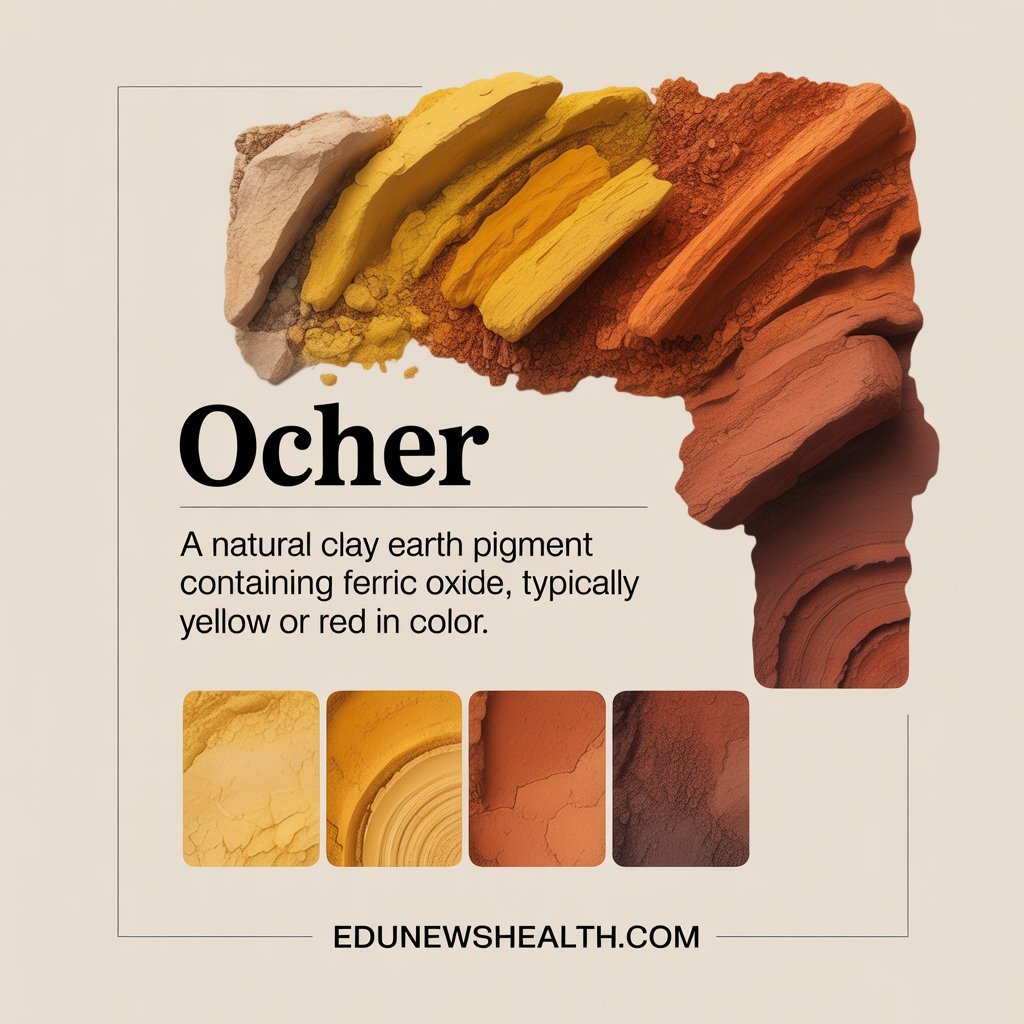
Ocher (also spelled ochre) is a natural clay earth pigment containing iron oxide combined with varying amounts of clay and sand. The ocher definition encompasses a range of yellow, orange, red, and brown earth colors that occur naturally in the soil.
At its core, ocher is iron oxide mixed with clay. The iron content gives it distinctive colors. Depending on the type and amount of iron oxide present, you’ll get different shades.
The word “ocher” comes from the Greek word “ōkhra,” meaning pale yellow. However, the color spectrum of ocher extends far beyond yellow alone.
What makes ocher special isn’t just its color. It’s incredibly stable, non-toxic, and permanent. These qualities made it invaluable to early humans. They had no chemistry labs or synthetic dyes. Yet they created artworks that still exist today.
The Chemistry Behind Ocher
Understanding the ocher definition requires a bit of chemistry knowledge. Don’t worry, I’ll keep it simple.
Ocher contains different forms of iron oxide. Yellow ocher contains hydrated iron oxide, specifically goethite (FeO(OH)). Red ocher contains anhydrous iron oxide, known as hematite (Fe₂O₃).
When you heat yellow ocher, something magical happens. The water molecules bound to the iron oxide are released. This transforms goethite into hematite. The color shifts from yellow to red or orange. Ancient peoples discovered this through fire. They could create a whole new palette by simply heating the pigment.
Brown ocher often contains a mixture of both goethite and hematite. It may also contain manganese oxides. These create the deeper, earthier tones.
The clay component in ocher acts as a binder. It helps the pigment adhere to surfaces. This is why ocher works so well as a paint without needing complex binders.
Types of Ocher: A Colorful Spectrum
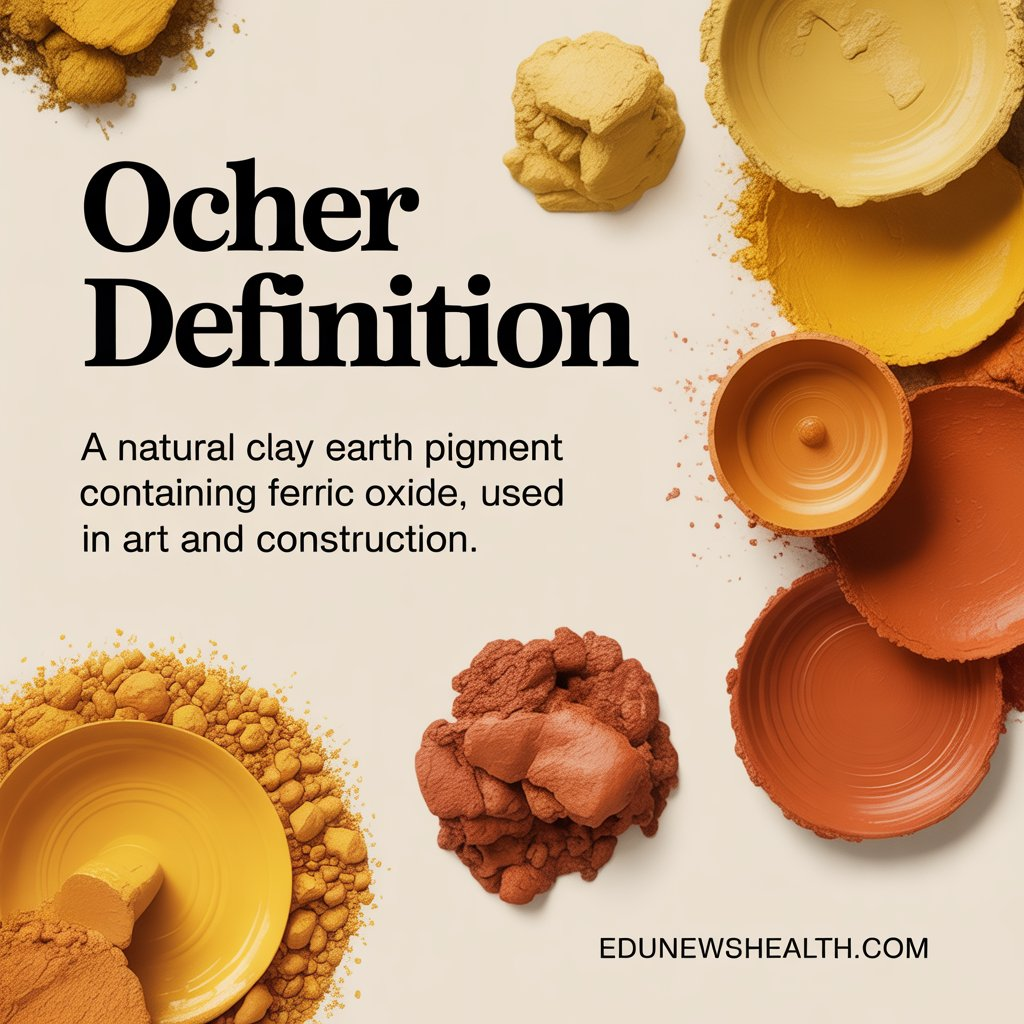
The ocher definition includes several distinct color varieties. Each type has unique properties and uses.
Yellow Ocher
Yellow ocher is perhaps the most recognizable type. It ranges from pale cream to deep golden yellow. Ancient artists used it extensively. You’ll find it in Egyptian tomb paintings and Roman frescoes.
Yellow ocher is soft and earthy. It mixes well with other pigments. Artists love it for creating warm, natural tones. The pigment is lightfast, meaning it won’t fade over time.
Red Ocher
Red ocher was humanity’s first red pigment. It appears in the oldest known cave paintings. The color comes from hematite, which forms when yellow ocher is heated or occurs naturally.
Red ocher ranges from orange-red to deep burgundy. Early humans used it for body decoration, rock art, and burials. Some cultures believed red ocher had spiritual or protective properties.
The pigment is incredibly durable. Red ocher paintings from 40,000 years ago still retain their vivid color.
Brown Ocher (Sienna)
Brown ocher, often called raw sienna, offers warm brown tones. It contains both yellow and red iron oxides. The combination creates rich, chocolate-like colors.
When you heat raw sienna, it becomes burnt sienna. This creates a deeper, redder brown. Renaissance artists particularly favored these pigments for creating shadows and depth.
Purple and Orange Ocher
Less common but equally beautiful are purple and orange ochers. Purple ocher contains hematite with additional minerals. Orange ocher sits between yellow and red on the spectrum.
These varieties appear in specific geological locations. Indigenous Australian artists have used purple ocher for thousands of years.
Historical Significance of Ocher
The story of ocher is the story of human creativity itself. Let me take you through time.
Prehistoric Era
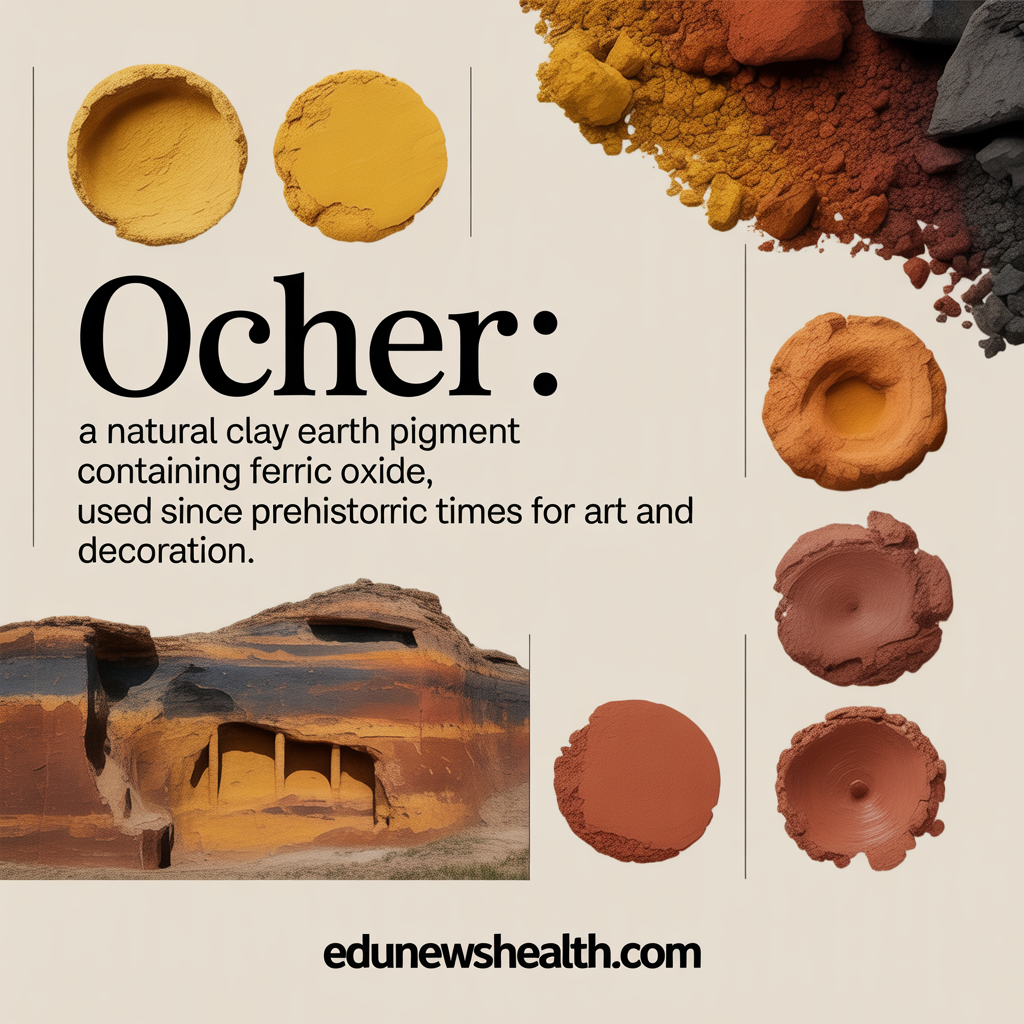
Archaeological evidence shows ocher use dating back 300,000 years. Early humans ground ocher into powder. They mixed it with fat, water, or other liquids. The result was humanity’s first paint.
The Blombos Cave in South Africa contains ocher processing tools from 100,000 years ago. These ancient workshops show that humans were sophisticated artists far earlier than previously thought.
Cave paintings in France, Spain, and Indonesia showcase spectacular ocher artwork. The Chauvet Cave in France contains ocher paintings over 30,000 years old. The images of horses, lions, and rhinos seem to leap off the walls.
Ancient Civilizations
Ancient Egypt embraced ocher enthusiastically. Yellow ocher appears throughout Egyptian art. Red ocher was used in cosmetics and body decoration. The Egyptians even used ocher in mummification processes.
In ancient Rome, ocher pigments were valuable trade commodities. Roman artists used ocher extensively in frescoes. Pompeii’s preserved walls showcase brilliant ocher reds and yellows.
Aboriginal Australians have used ocher continuously for over 50,000 years. It holds deep cultural and spiritual significance. Different ocher colors represent different meanings and stories. The tradition continues today.
Medieval to Modern Times
During the Renaissance, artists refined ocher techniques. They created subtle gradations and realistic shadows. Masters like Leonardo da Vinci and Michelangelo relied heavily on ocher pigments.
Ocher remained essential until synthetic pigments emerged in the 19th century. Even then, many artists preferred natural ocher. Its unique properties and subtle variations couldn’t be perfectly replicated.
Where Does Ocher Come From?
Understanding the ocher definition includes knowing where it’s found. Ocher deposits exist worldwide, but quality varies by location.
Ocher forms through the weathering of iron-rich rocks. Water and oxygen interact with iron minerals. Over time, this creates ocher deposits in clay or sandstone.
Famous ocher mines exist in France, particularly in Roussillon. This picturesque village sits amid striking ocher cliffs. The colors range from pale yellow to deep red. The landscape looks almost otherworldly.
Australia has abundant ocher deposits. Many hold cultural significance to Aboriginal communities. Some deposits have been mined continuously for thousands of years.
The United States has notable deposits in Pennsylvania, Georgia, and California. These supplied pigment for early American paint industries.
Italy’s Tuscany region produces high-quality siennas. The town of Siena gave burnt sienna its name.
Modern Uses of Ocher
You might think ocher is just a historical curiosity. Think again. This ancient pigment remains remarkably relevant today.
Art and Painting
Professional artists still choose ocher pigments. Watercolorists love yellow ocher for landscapes. Oil painters use it for underpainting and glazes. The pigment is permanent, non-toxic, and beautifully versatile.
Ocher’s opacity makes it excellent for covering surfaces. Its tinting strength allows for subtle color mixing. Many artists prefer natural ocher over synthetic alternatives.
Construction and Building
Ocher adds color to natural building materials. Rammed earth construction often incorporates ocher. It creates warm, earthy building tones. Lime washes and natural plasters frequently contain ocher pigments.
In restoration work, matching historical ocher colors is crucial. Conservators use natural ocher to maintain authenticity.
Cosmetics and Personal Care
Ocher appears in natural cosmetics and makeup. It provides safe, mineral-based pigmentation. Some cultures still use ocher in traditional body decoration.
Natural sunscreens sometimes include red ocher. It offers mild UV protection. While not a substitute for modern sunscreen, it’s an interesting historical application.
Industrial Applications
Ocher serves as a pigment in paints, coatings, and cement. It’s cost-effective and environmentally friendly. The pigment industry values ocher for these qualities.
Ocher is used in coloring rubber, plastics, and paper. Its non-toxic nature makes it suitable for many applications.
How to Work with Ocher
Want to try ocher yourself? Here’s what you need to know.
Sourcing Ocher
You can purchase prepared ocher pigments from art supply stores. Look for labels indicating natural ocher. Quality varies, so buy from reputable suppliers.
If you’re adventurous, you can collect raw ocher from appropriate locations. Always obtain permission before collecting. Some sites are protected or culturally significant.
Preparing Ocher Pigment
Raw ocher needs processing before use. First, dry the material completely. Then, grind it into powder. A mortar and pestle works well for small quantities.
Sift the powder to remove large particles. Finer powder creates smoother paint. Some artists prefer coarser textures for specific effects.
Making Ocher Paint
Mix ocher powder with a binder. For watercolor, use gum arabic. For tempera, use egg yolk. For oil paint, use linseed oil.
The ratio matters. Start with roughly equal parts pigment and binder. Adjust to achieve desired consistency. Too much binder creates pale, translucent paint. Too much pigment creates a crumbly texture.
Add water or oil to reach the right fluidity. Mix thoroughly to eliminate lumps.
Tips for Using Ocher
Ocher has excellent covering power. A little goes a long way. Start with small amounts and build up color gradually.
The pigment layers beautifully. Create depth by applying multiple thin coats. This technique was used by old masters with stunning results.
Ocher mixes well with other earth pigments. Try combining it with umbers, siennas, or iron oxides. You’ll discover endless subtle variations.
Environmental and Health Aspects
One major advantage of ocher is its safety profile. Unlike some historical pigments, ocher is non-toxic. It contains no lead, arsenic, or other hazardous materials.
This makes ocher safe for artists, including children. You don’t need special precautions beyond basic cleanliness. Of course, you shouldn’t deliberately inhale any dust. Standard dust masks are sufficient when working with dry pigment.
Environmentally, ocher is sustainable. It’s a natural mineral that doesn’t require complex chemical processing. Mining ocher has relatively low environmental impact compared to synthetic pigment production.
However, ethical sourcing matters. Some ocher deposits are on indigenous lands. Always respect cultural heritage and obtain materials from legitimate sources.
Ocher vs. Modern Synthetic Pigments
How does ancient ocher compare to modern alternatives? The answer is nuanced.
Synthetic iron oxide pigments offer consistency. Every batch is identical. Colors are predictable. For industrial applications, this consistency is valuable.
Natural ocher has beautiful variation. No two batches are exactly alike. Some artists consider this a feature, not a bug. The subtle differences add character.
Ocher’s particle size varies naturally. This creates unique texture and handling properties. Synthetic versions often feel different, even when they look similar.
Many artists use both. They appreciate synthetic pigments for specific needs. But they also value natural ocher for its unique qualities.
Cultural Significance Around the World
The ocher definition extends beyond chemistry and color. It encompasses deep cultural meaning.
Aboriginal Australia
For Aboriginal Australians, ocher is sacred. It connects people to country and ancestors. Different ocher deposits belong to different groups. Using someone else’s ocher without permission is a serious transgression.
Ocher features in ceremonies, body painting, and rock art. Colors carry specific meanings. White, yellow, red, and black ochers each have significance.
African Traditions
Many African cultures use ocher extensively. The Himba people of Namibia cover their skin with red ocher mixed with butterfat. This protects skin from sun and insects. It also represents beauty and cultural identity.
In South Africa, ocher use dates back hundreds of thousands of years. The tradition continues in various forms today.
European History
European peoples also valued ocher highly. From Paleolithic caves to medieval manuscripts, ocher appears throughout European art history.
The pigment colored everything from illuminated manuscripts to Renaissance masterpieces. Its stability ensured these artworks survived centuries.
Common Questions About Ocher
Is ocher rare?
No, ocher is relatively common. Deposits exist on every continent. However, high-quality artistic ocher from specific locations can be valuable.
Can you make your own ocher?
Yes, if you can access raw materials. Many artists enjoy processing their own pigments. Just ensure you’re collecting from permitted locations.
Does ocher fade?
Natural ocher is extremely lightfast. Properly prepared and applied ocher paintings can last thousands of years. It’s one of the most permanent pigments available.
Is all ocher the same?
No. Ocher varies significantly based on source, iron oxide type, and clay content. French ocher differs from Australian ocher. Even within one location, variations occur.
Why use natural ocher instead of synthetic alternatives?
Many artists prefer natural ocher’s handling properties and subtle variations. Others value the historical connection. Some choose it for environmental reasons.
The Future of Ocher
Despite being ancient, ocher has a bright future. Interest in natural, sustainable materials is growing. Artists, builders, and consumers increasingly seek alternatives to synthetic products.
Ocher fits this trend perfectly. It’s natural, non-toxic, and sustainable. Modern technology allows us to process and apply ocher more efficiently. Yet we’re still using essentially the same material our ancestors used.
Research continues into ocher’s properties. Scientists study why ancient ocher paintings survived so well. This knowledge helps with art conservation and restoration.
New applications emerge regularly. Natural building movements embrace ocher for coloring earth structures. Cosmetic companies develop ocher-based products. The ancient pigment adapts to modern needs.
Conclusion
The ocher definition encompasses much more than a simple earth pigment. It represents humanity’s creative spirit, our connection to nature, and our desire to make beauty from simple materials. From prehistoric caves to contemporary studios, ocher has colored human expression for hundreds of thousands of years.
This remarkable mineral is stable, beautiful, and endlessly versatile. Whether you’re an artist seeking authentic natural pigments, a history enthusiast fascinated by ancient technologies, or someone interested in sustainable materials, ocher offers something special.
Next time you see earthy yellows, oranges, and reds in historical artwork or natural buildings, you’ll recognize ocher’s distinctive presence. Perhaps you’ll even try working with this ancient pigment yourself. The same material that colored cave walls can color your creative projects today.
What will you create with ocher? The possibilities are as endless as human imagination itself.
Frequently Asked Questions (FAQs)
1. What exactly is ocher made of?
Ocher consists of iron oxide minerals mixed with clay and sand. Yellow ocher contains goethite (hydrated iron oxide), while red ocher contains hematite (anhydrous iron oxide). The specific composition varies by location and geological conditions.
2. How do you pronounce ocher?
Ocher is pronounced “OH-ker” in American English. In British English, it’s often spelled “ochre” and pronounced the same way. Both spellings and pronunciations are correct.
3. Can you still buy natural ocher today?
Yes, natural ocher is readily available from art supply stores and pigment suppliers. You can purchase it as dry powder or pre-mixed paint. Quality and sources vary, so research suppliers carefully.
4. Why was ocher so important to prehistoric humans?
Ocher was one of the few colorful materials available to prehistoric people. It was stable, permanent, and easy to process. Early humans used it for art, body decoration, and possibly ceremonial purposes. Some researchers believe ocher use indicates advanced cognitive abilities.
5. Is ocher toxic or dangerous to use?
Natural ocher is non-toxic and safe to handle. Unlike some historical pigments containing lead or mercury, ocher presents minimal health risks. When working with dry pigment powder, use basic dust precautions like wearing a mask to avoid inhalation.
6. What’s the difference between ocher and ochre?
There’s no difference except spelling. “Ocher” is the American spelling, while “ochre” is preferred in British English. Both refer to the same natural earth pigment.
7. How is synthetic ocher different from natural ocher?
Synthetic iron oxide pigments offer consistent color and particle size. Natural ocher varies subtly between batches and locations. Many artists prefer natural ocher’s unique texture and handling properties, though synthetic versions work well for industrial applications.
8. Where can I find ocher in nature?
Ocher deposits occur worldwide, particularly in areas with iron-rich geology. Famous sources include Roussillon in France, various Australian locations, and sites throughout North America and Africa. Always obtain permission before collecting from any location.
9. Can you make different colors by heating ocher?
Yes! When you heat yellow ocher, it transforms into red ocher. This occurs because heat drives off water molecules from goethite, converting it to hematite. Ancient peoples discovered this technique and used it to expand their color palette.
10. Why do cave paintings made with ocher last so long?
Ocher is extremely stable and lightfast. The iron oxide doesn’t break down easily. Additionally, cave environments protect paintings from weather and UV light. The mineral nature of ocher means it essentially becomes part of the rock surface, unlike organic dyes that deteriorate.
Also Read : How To Divide Fractions with Whole Numbers