
Ultimate Guide To What is Chemical Change: Transform Your Understanding of Matter 2026
Introduction
Have you ever wondered what happens when a piece of paper burns or when iron turns rusty? These aren’t just simple changes. They’re chemical transformations that alter matter at its core.
Understanding what is a chemical change is more important than you might think. Every day, you witness countless chemical changes without even realizing it. From the moment you cook breakfast to when you start your car, chemical changes are happening all around you.
What is a chemical change, exactly? It’s a process where substances combine or break apart to form entirely new substances with different properties. Unlike physical changes that only affect appearance, chemical changes create something fundamentally different.
In this article, you’ll discover everything about chemical changes. We’ll explore real examples, learn how to identify them, and understand why they matter in your daily life.
What Is a Chemical Change? The Complete Definition
A chemical change occurs when one or more substances transform into entirely new substances. The original materials undergo a chemical reaction that rearranges their atoms and molecules.
When a chemical change happens, the molecular structure changes completely. You can’t simply reverse it by physical means. The new substance has different properties from the original.
Think of it this way. When you bake a cake, you can’t unbake it. The eggs, flour, and sugar undergo chemical changes. They create something entirely new with different taste, texture, and composition.
Scientists call chemical changes “chemical reactions.” These reactions involve breaking old chemical bonds and forming new ones. The atoms rearrange themselves into different configurations.
Key Characteristics of Chemical Changes
Chemical changes have specific features that help you identify them:
- New substance formation: The end product differs chemically from the starting materials
- Energy changes: Heat, light, or sound often accompanies the reaction
- Irreversibility: You can’t easily undo the change
- Color changes: Many chemical changes produce visible color shifts
- Gas production: Bubbles or odors may indicate a chemical reaction
Chemical Change vs. Physical Change: Spotting the Difference
Understanding what is a chemical change becomes clearer when you compare it to physical changes. Many people confuse these two types of changes.
Physical changes only alter appearance or state. The substance remains chemically identical. When ice melts into water, it’s still H2O. The molecular structure doesn’t change.
Chemical changes create new substances entirely. When wood burns, it becomes ash, smoke, and gases. You can’t turn these products back into wood. The chemical composition has fundamentally changed.
Physical Change Examples
- Cutting paper into pieces
- Dissolving sugar in water
- Freezing water into ice
- Breaking glass
- Crushing a can
Chemical Change Examples
- Burning wood or paper
- Rusting of iron
- Cooking an egg
- Digesting food
- Fireworks exploding
The difference matters. Physical changes are usually reversible. Chemical changes typically aren’t. This distinction helps you understand what is a chemical change in practical terms.
Common Signs That Indicate a Chemical Change

How do you know when a chemical change is occurring? Look for these telltale signs.
Color Change: When substances change color unexpectedly, it often signals a chemical reaction. Rust turning iron reddish-brown is a classic example. Leaves changing color in autumn also involves chemical changes.
Temperature Change: Chemical reactions either release or absorb energy. When you feel heat or cold during a reaction, that’s a sign. Burning releases heat. Instant cold packs absorb heat through chemical reactions.
Gas Production: Bubbles, fizzing, or smoke indicate gas formation. When you drop an antacid tablet in water, it fizzes. That’s carbon dioxide gas being produced through a chemical change.
Precipitate Formation: When two clear liquids mix and form a solid, that’s a precipitate. This solid substance is chemically different from the original liquids.
Odor Production: New smells often accompany chemical changes. The smell of baking cookies comes from chemical reactions. Spoiled food produces unpleasant odors through chemical decomposition.
Light Production: Some chemical changes emit light. Fireflies glow through bioluminescent chemical reactions. Glow sticks work the same way.
Not every chemical change shows all these signs. Sometimes only one or two indicators appear. The key is recognizing that something new has formed.
Real-World Examples of Chemical Changes
Chemical changes happen everywhere. Let me show you examples from everyday life that demonstrate what is a chemical change.
In Your Kitchen
Your kitchen is a chemistry lab. Cooking involves numerous chemical changes.
When you bake bread, yeast produces carbon dioxide through fermentation. This chemical change makes the dough rise. The heat then causes more reactions that create the bread’s texture and flavor.
Caramelizing onions involves chemical changes. Heat breaks down sugars, creating new compounds with different flavors and colors.
Grilling meat causes the Maillard reaction. This chemical change between amino acids and sugars creates that delicious browned crust.
In Nature
Nature constantly demonstrates chemical changes.
Photosynthesis is a vital chemical change. Plants convert carbon dioxide and water into glucose and oxygen. This reaction powers most life on Earth.
Rusting occurs when iron reacts with oxygen and water. This chemical change weakens metal structures over time. It costs billions in damage annually.
Decomposition breaks down organic matter. Bacteria and fungi use chemical reactions to turn dead plants and animals into nutrients for soil.
In Your Body
Your body runs on chemical changes.
Digestion breaks down food molecules through chemical reactions. Enzymes help transform proteins, carbohydrates, and fats into usable nutrients.
Cellular respiration converts glucose and oxygen into energy, carbon dioxide, and water. This chemical change keeps you alive.
Blood clotting involves complex chemical reactions. When you cut yourself, proteins undergo chemical changes to form clots and stop bleeding.
In Industry and Technology
Modern life depends on chemical changes.
Batteries produce electricity through chemical reactions. When your phone charges, chemical changes store energy in the battery.
Combustion engines burn fuel in a chemical reaction. This change releases energy that powers vehicles.
Manufacturing plastics involves polymerization. Small molecules undergo chemical changes to form long chains, creating versatile materials.
The Science Behind Chemical Changes
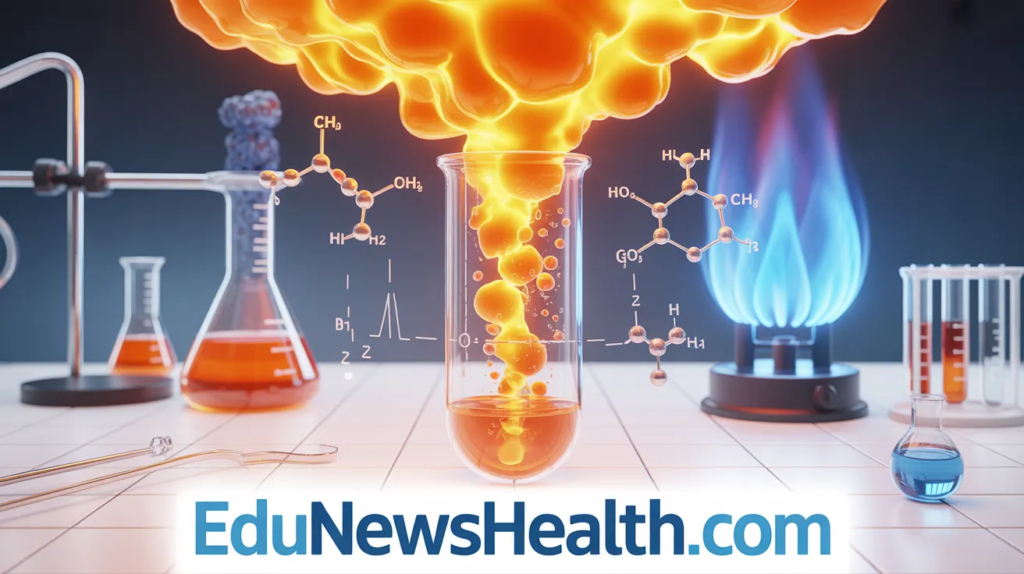
Understanding what is a chemical change requires looking at the molecular level. Let’s break down the science.
Chemical Bonds and Reactions
Atoms connect through chemical bonds. These bonds hold molecules together. During a chemical change, bonds break and new ones form.
Breaking bonds requires energy. Forming bonds releases energy. The difference determines whether a reaction releases heat (exothermic) or absorbs it (endothermic).
Types of Chemical Reactions
Chemical changes follow specific patterns:
Synthesis Reactions: Two or more substances combine to form one new substance. When hydrogen and oxygen combine, they create water.
Decomposition Reactions: One substance breaks into two or more simpler substances. Heating sugar causes it to decompose into carbon and water vapor.
Combustion Reactions: A substance reacts with oxygen, producing heat and light. Burning wood is a combustion reaction.
Displacement Reactions: One element replaces another in a compound. When zinc meets hydrochloric acid, hydrogen gets displaced.
Conservation of Mass
Here’s something fascinating about chemical changes. The total mass stays constant. Atoms don’t disappear or appear from nothing.
French chemist Antoine Lavoisier proved this principle. In chemical changes, atoms just rearrange. The number of each type of atom remains the same before and after.
This is why chemical equations must balance. The same elements appear on both sides, just in different combinations.
Why Chemical Changes Matter in Daily Life
Understanding what is a chemical change isn’t just academic. It affects your daily decisions and safety.
Food Safety and Cooking
Knowing about chemical changes helps you cook better. Understanding how heat affects food prevents overcooking or undercooking.
Chemical changes also signal food spoilage. That sour smell from old milk? It’s a chemical change caused by bacteria. Recognizing these signs protects your health.
Health and Medicine
Medicine relies on chemical changes. When you take medication, chemical reactions in your body produce therapeutic effects.
Understanding chemical changes helps you use medicines safely. Mixing certain medications can cause dangerous chemical reactions.
Environmental Awareness
Many environmental issues involve unwanted chemical changes. Pollution results from chemical reactions in the atmosphere.
Acid rain forms when sulfur dioxide and nitrogen oxides undergo chemical changes in the air. These chemicals damage forests, buildings, and water systems.
Climate change connects to chemical changes too. Burning fossil fuels releases carbon dioxide through combustion. This greenhouse gas accumulates through chemical processes.
Home Safety
Chemical changes can be dangerous. Mixing cleaning products sometimes creates toxic gases. Bleach and ammonia produce chloramine gas, which can harm your lungs.
Fire is a chemical change that can devastate homes. Understanding combustion helps you prevent fires and respond appropriately during emergencies.
How to Identify Chemical Changes: A Practical Guide
Want to recognize chemical changes when you see them? Follow this simple approach.
Step 1: Observe Carefully. Look for the signs we discussed earlier. Does the substance look different? Is there a temperature change?
Step 2: Check Reversibility. Can you easily reverse the change? If not, it’s likely chemical. Physical changes usually reverse easily.
Step 3: Test Properties. If possible, safely test the substance’s properties. Does it react differently to heat or water?
Step 4: Look for Evidence. Search for gas production, precipitates, or energy changes. These strongly indicate chemical reactions.
Step 5: Consider the Process. What happened to cause the change? Heating, mixing, or exposure to air often triggers chemical changes.
Remember, safety comes first. Never test unknown substances. Some chemical changes produce dangerous products.
Chemical Changes in Education and Career

Understanding what is a chemical change opens doors professionally. Chemistry knowledge applies to numerous careers.
Career Applications
Medicine and Healthcare: Doctors and pharmacists must understand chemical reactions. Drug interactions and body processes involve complex chemistry.
Food Science: Food scientists study chemical changes in cooking and preservation. They develop new products and ensure food safety.
Environmental Science: Environmental professionals monitor chemical changes in ecosystems. They develop solutions for pollution and sustainability.
Engineering: Chemical engineers design processes for manufacturing. They optimize reactions for efficiency and safety.
Forensics: Crime scene investigators use chemistry to analyze evidence. Chemical changes help them solve cases.
Educational Importance
Learning about chemical changes builds critical thinking. You learn to observe, hypothesize, and test ideas.
Chemistry education teaches problem-solving skills. Understanding reactions helps you make informed decisions about health, environment, and technology.
Fun Experiments to Observe Chemical Changes at Home
Want to see chemical changes firsthand? Try these safe experiments.
Baking Soda and Vinegar Volcano
Mix baking soda with vinegar. Watch the fizzing reaction. This chemical change produces carbon dioxide gas.
The reaction demonstrates acid-base chemistry. It’s safe, dramatic, and educational.
Tarnishing Silver
Expose silver to air containing sulfur. Eggs work well for this. The silver undergoes a chemical change, forming silver sulfide.
This experiment shows oxidation. It’s slow but clearly demonstrates chemical transformation.
Milk and Food Coloring
Add drops of food coloring to milk. Touch with dish soap. The colors swirl dramatically.
While the color movement is physical, the soap breaks down fat molecules chemically. It’s a beautiful demonstration of chemical interaction.
Conclusion
Chemical changes shape our world in profound ways. From the food you eat to the air you breathe, these transformations are everywhere.
You now understand what is a chemical change and how to identify one. You’ve learned the difference between chemical and physical changes. You’ve seen real-world examples and understand why this knowledge matters.
Chemical changes aren’t just science textbook concepts. They’re practical, observable phenomena that affect your daily life. Whether you’re cooking dinner, driving your car, or simply breathing, chemical reactions are happening constantly.
The next time you see rust, smell baking cookies, or watch a candle burn, you’ll recognize the chemical changes at work. This knowledge empowers you to make better decisions about food, health, safety, and the environment.
What chemical changes have you noticed today? Look around. You might be surprised by how many transformations are happening right now.
Frequently Asked Questions (FAQs)
Q1: What is a chemical change in simple terms?
A chemical change is when substances transform into entirely new substances with different properties. The original materials undergo reactions that rearrange their atoms, creating something chemically different that usually can’t be reversed easily.
Q2: How is a chemical change different from a physical change?
Chemical changes create new substances with different chemical compositions. Physical changes only alter appearance or state without changing the substance’s molecular structure. For example, burning wood is chemical; melting ice is physical.
Q3: What are five examples of chemical changes?
Common chemical changes include: burning wood or paper, rusting of iron, cooking an egg, digesting food, and baking a cake. All these processes create new substances that differ chemically from the starting materials.
Q4: Can chemical changes be reversed?
Most chemical changes are irreversible or difficult to reverse. You can’t unbake a cake or turn ashes back into wood. However, some chemical reactions can be reversed through other chemical processes, though not by simple physical means.
Q5: What signs indicate a chemical change is occurring?
Look for color changes, temperature changes, gas production (bubbles or odors), precipitate formation, or light emission. Not all chemical changes show every sign, but one or more indicators usually appear during the reaction.
Q6: Is dissolving sugar in water a chemical change?
No, dissolving sugar is a physical change. The sugar molecules separate but don’t chemically change. You can recover the sugar by evaporating the water, proving no new substance formed.
Q7: Why do chemical changes produce heat or light?
Chemical changes involve breaking and forming bonds. Breaking bonds requires energy, while forming bonds releases energy. If more energy is released than absorbed, the reaction produces heat or light. These are called exothermic reactions.
Q8: What is a chemical change in digestion?
Digestion involves multiple chemical changes. Enzymes break down food molecules into smaller nutrients your body can absorb. Proteins become amino acids, carbohydrates become simple sugars, and fats break into fatty acids and glycerol.
Q9: Are all chemical changes permanent?
While most chemical changes are difficult to reverse, “permanent” isn’t quite accurate. Some reactions can be reversed through other chemical processes. However, you generally can’t reverse them through simple physical means like heating or cooling.
Q10: How do chemical changes affect the environment?
Chemical changes drive many environmental processes. Photosynthesis, decomposition, and weathering are natural examples. However, pollution and climate change also result from chemical reactions like combustion of fossil fuels, making understanding chemical changes crucial for environmental protection.
Also Read : Cold Sore Medicine